Still in the footsteps of gladiators

I visited the next three amphitheatres on my hit list while enjoying mini breaks with family and friends.

On the way to the fabulous Dorset resort of Weymouth, a place full of many happy memories for me and my family, is Dorchester. A delightful town with lots to see and do, it’s roots date back to Roman times when it was known as Durnovaria. In the south of the town lie the Maumbury rings, a Neolithic henge. Around 60 ACE the Romans modified the rings to create an arena, the biggest in the UK, by digging out and flattening the inside and flooring it with chalk and sand. The banks were increased to the height they are as seen today. As my mum and my friend Deb waited in the car I had a bit of a mooch around the amphitheatre before we continued onto Weymouth for a few days in the sun.

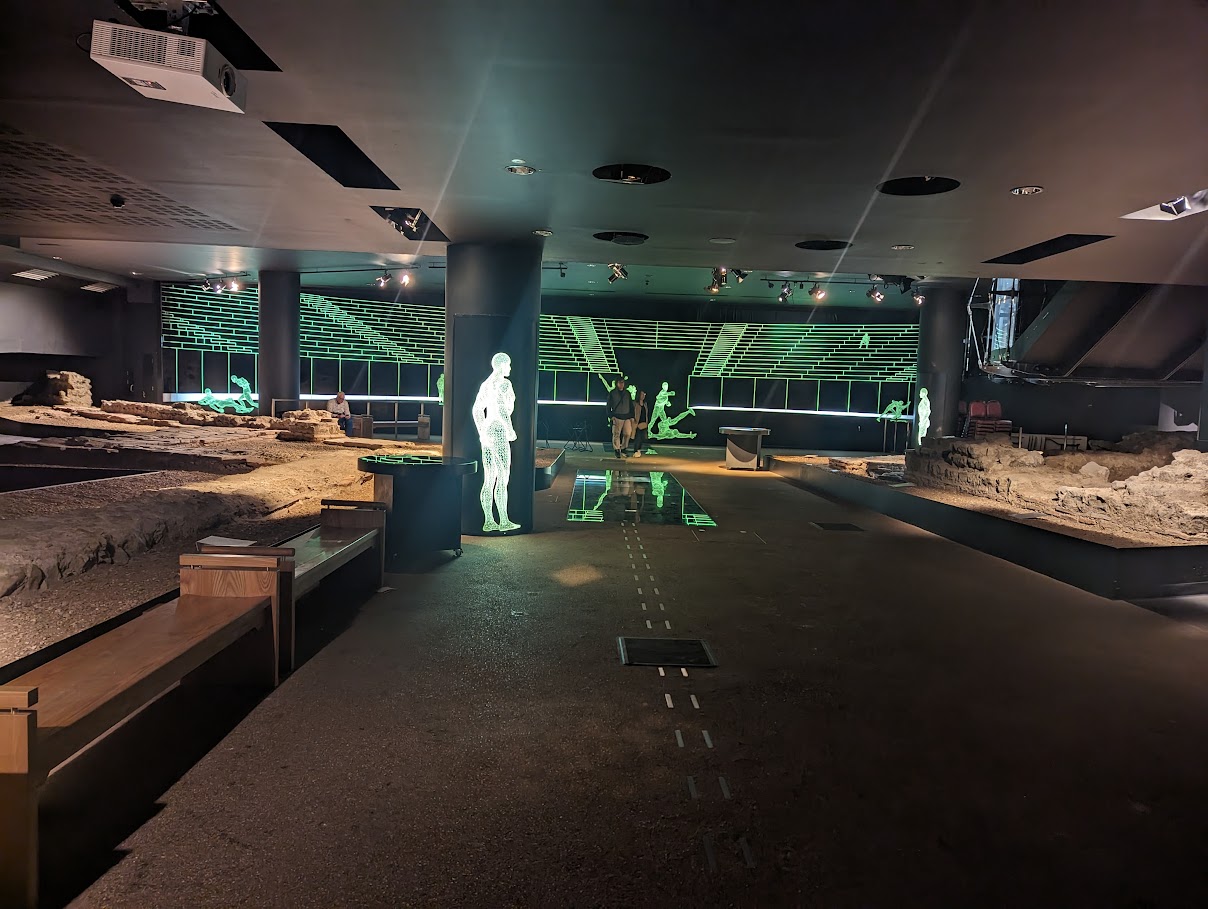
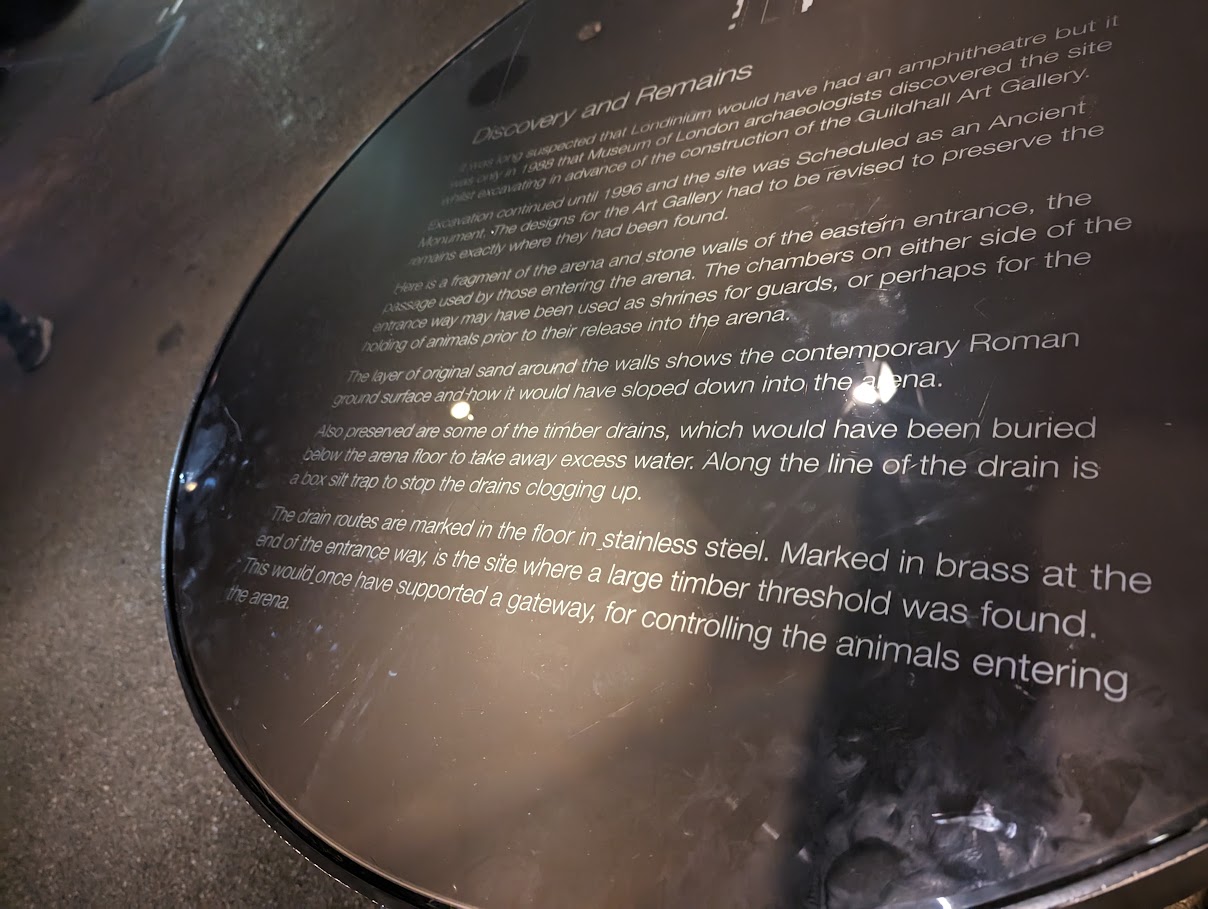
Not long before the trip to London to celebrate the 60th birthdays of my friends Bev and Debbie, I read about the underground amphitheatre that was discovered in the Guildhall Yard in 1988 during an archaeological dig to prepare for the new Art Gallery building project. Initially when built in 70 ACE it was a simple wooden structure for the entertainment of the citizens of Londinium, but was upgraded to a more impressive stone arena with the capacity for 6000 people. Unusually it was built within the city walls, remains of the walls can still be visited around the area. We had a wander around the site in the morning before we went in our 1970’s finery to the Mamma Mia party at the O2.
Chester is quite a long way from Bristol for a day out to check out an amphitheatre, but it’s a hop, skip and a jump from Liverpool and that’s where I was staying with my friends Deb and Selena for a couple of days. We had the most amazing time doing all things Beatles, Cilla and Liver birds. On the way home with stopped off at Chester, known as Deva Victrix in Roman times, to cross another arena off my list. It was one of the largest amphitheatres in Roman Britain with a capacity of 8000 – 12000, but only two fifths are now visible to view. It’s still an impressive sight and also there are the lovely Roman gardens to stroll around and admire the beautiful mosaics.

Next stop Movidurium, Isca Augusta and Verularnium … aka Carmarthen, Caerleon and St Albans.

In the footsteps of gladiators

As I have already alluded to with many posts in this blog, I am an classical history nut. I love nothing better than wandering ancient ruins and learning about the history. I was having a bit of a mooch around a well known search engine and discovered that there are 10 Roman amphitheatres in the UK according to Heritage Daily.com. Armed with my list, I did my research and made plans to visit each arena, last week I completed my quest.

But before I write about the sites I visited I thought I’d just say a few words about the amphitheatres I didn’t travel to. I live in Bristol in the Southwest so I needed to weigh up if the journey was going to be worth it, to that end I checked out the photos taken and posted by previous visitors.

In Chichester, it’s roman name Noriomagus Reginartum, there is nothing but a field with a gentle bank that outlines where the arena once stood.

Near Margate in Richborough, known in Roman Britain as Rutlipiae or Portus Ritupis, is also essentially a field but this time with a hollow marking the spot where the amphitheatre once was.

Much as I love a good day out, I figured it was a long way to travel to see a field when I had no other reason to visit, so I was content to look at the photos and read a bit more about them online.

My quest began by happenstance well before it was a conscious decision to do so. In January 2018 while on a family get together at my cousin Amelia’s house in Reading, we went on a bracing walk after Sunday lunch and had a wander around the amphitheatre at Silchester. It was built around 60 to 85 ACE when the town was called Callera Atrebatum and was one of the earliest arenas built in Roman Britain. It stood just outside the city walls of a large Roman town with the usual street grid format over 40 hectares. Although I have always been interested in ancient history I never really fully appreciated this look around which is reflected in the rubbish photos I took!

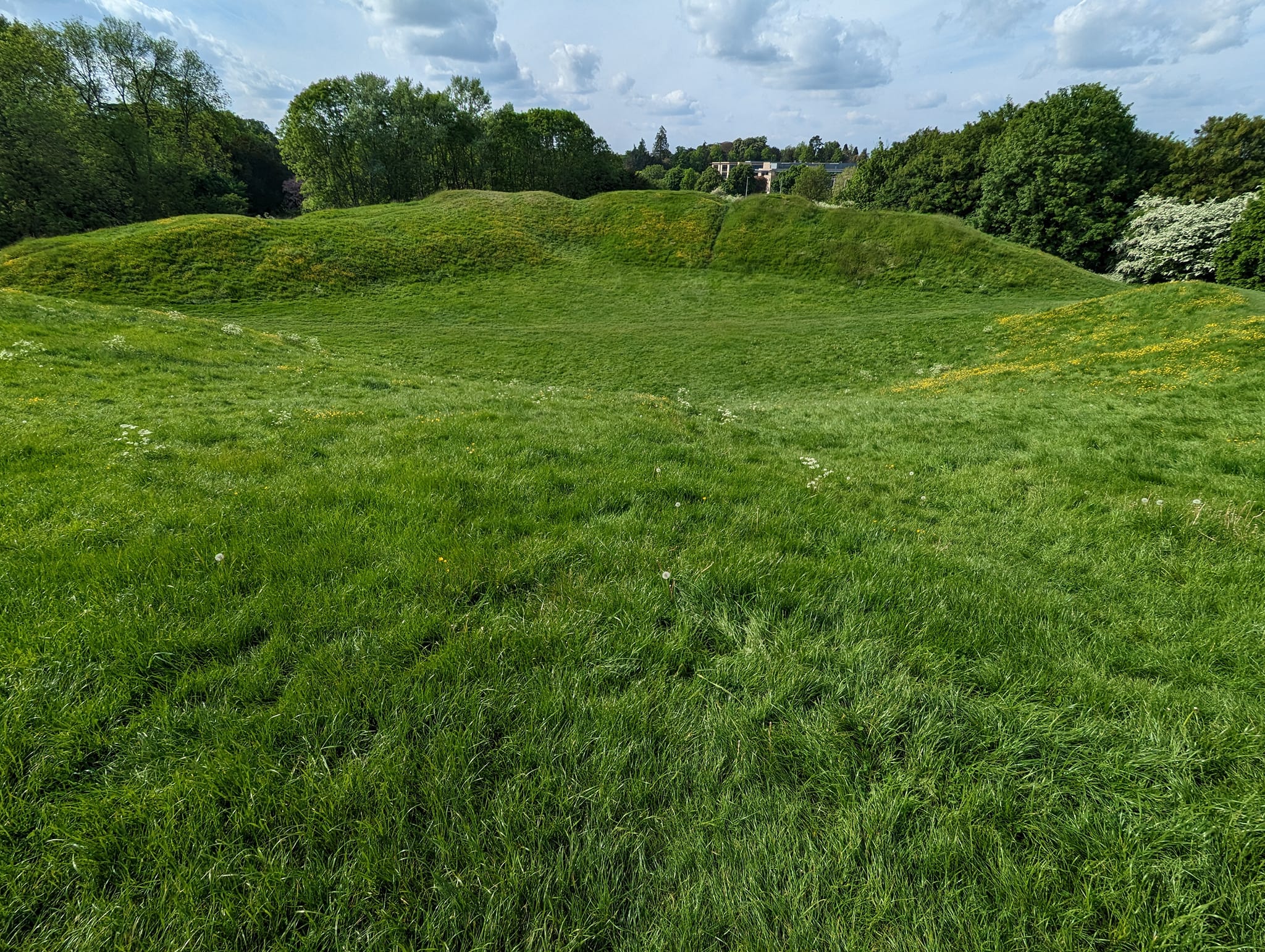
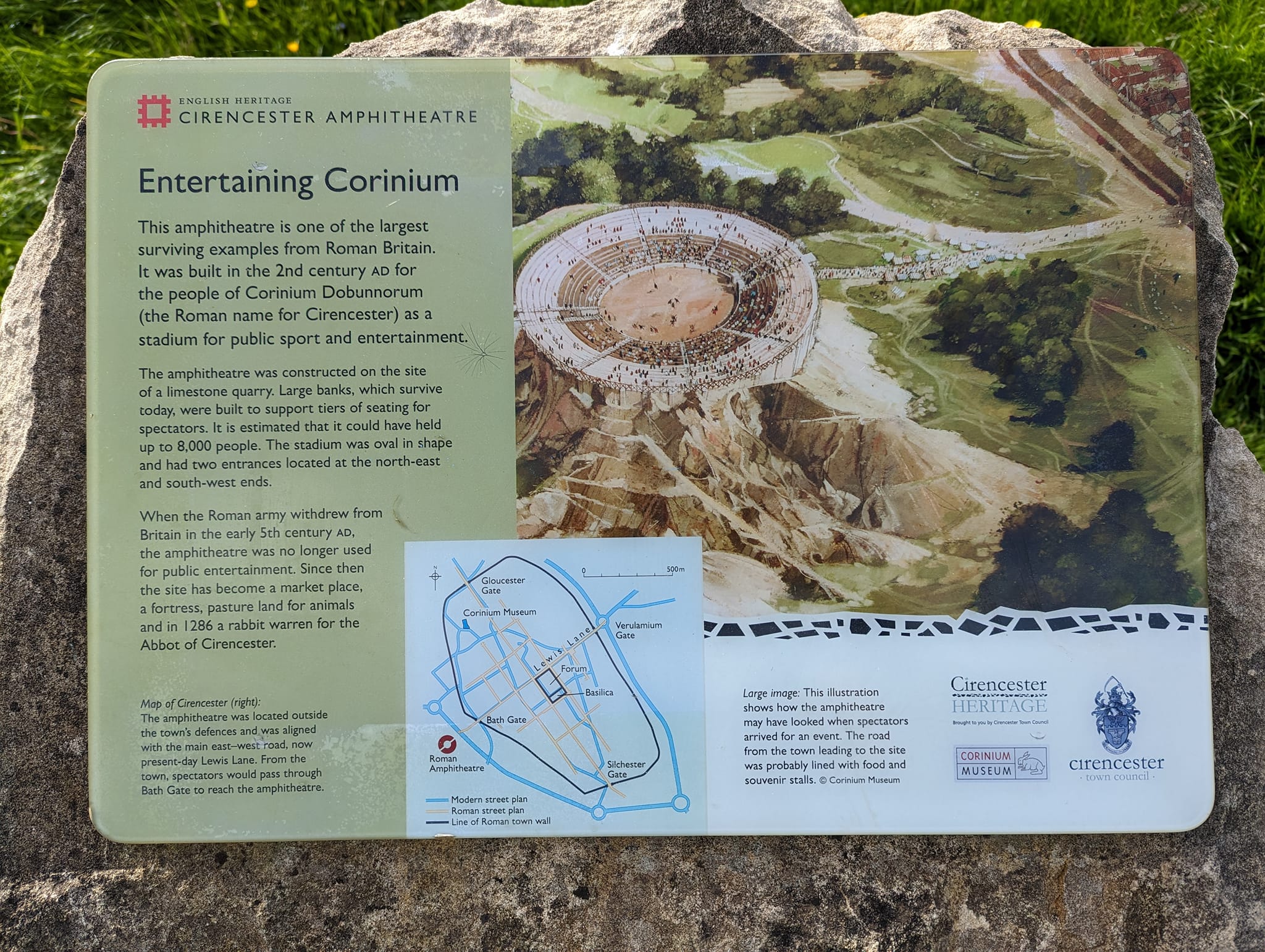
The next theatre that I visited by chance was at Cirencester. My mum and I had been on a lovely day out to Bourton on the Water and on the drive home I didn’t realise that I would be driving past the site. The arena was on my hit list but I hadn’t planned on checking it out on that day. I saw the sign for it and took my chance to cross another arena off the list. Built in the early 2nd century ACE it was one of the largest amphitheatres in Roman Britain. The city was known as Cornium and had a population of over 10000 inhabitants. The remains are massive earthworks but you can clearly see the size of the arena and imagine how it would have looked in it’s former glory.

Next stop Dorchester, London and Chester aka Durnovaria, Londinium and Deva Victrix….