The Miracle of Nature

I love gardening and I spend a lot of my spare time visiting garden centres, pottering around my garden and generally trying to make room for the plants I feel compelled to buy on a very regular basis.

While I’m very successful in the great outdoors and the garden is blooming, especially with all the rain we’ve had recently in the UK, anyone who knows me knows that the fate of any house plant is another story. Unfortunately they either die of thirst or they suffer the torture of water boarding and eventually drown.

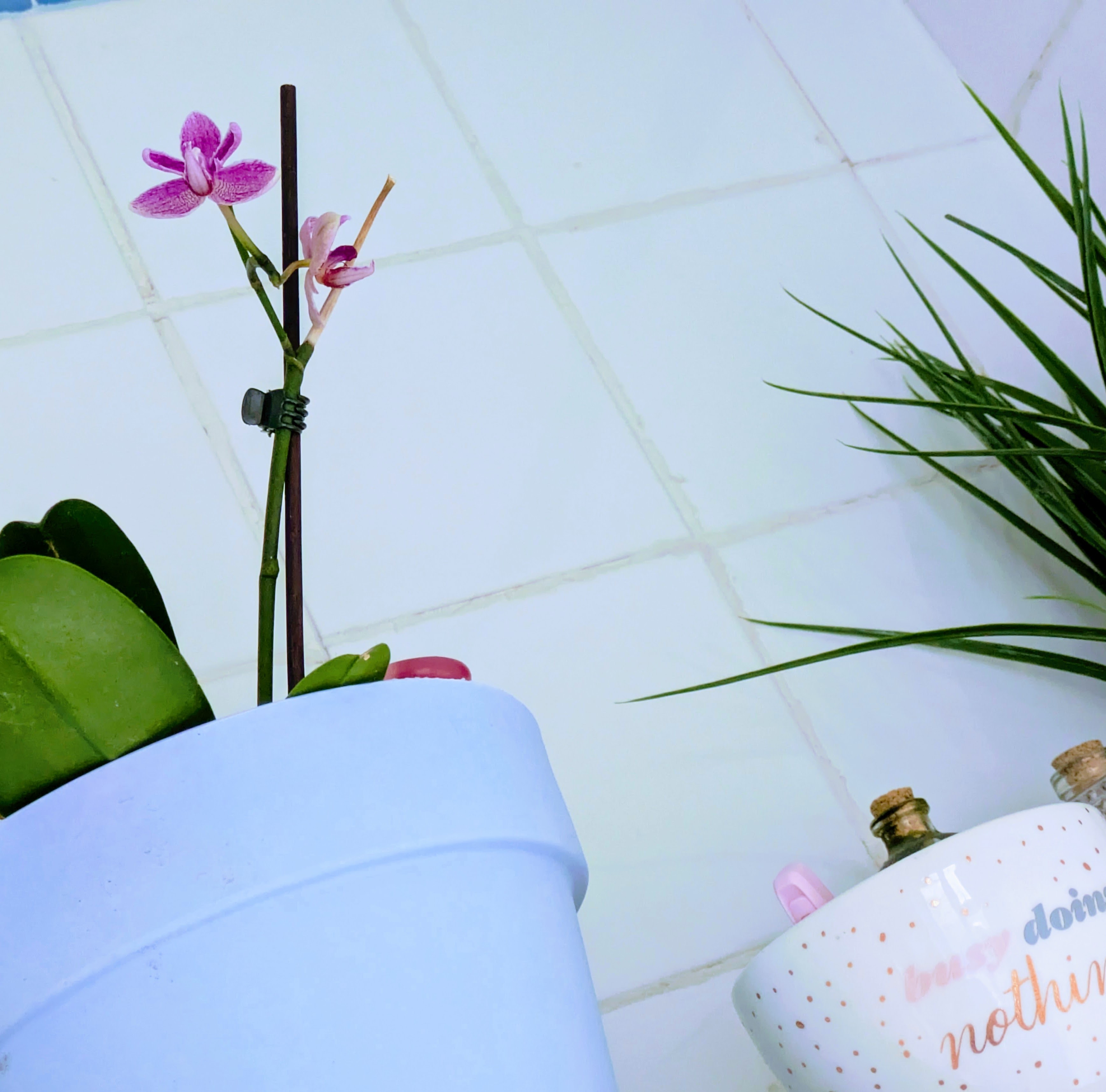
So imagine my horror when a poor innocent orchid came into the house as a mother’s day present, as I unwrapped the beautiful specimen I feared for it’s life. My first move was to put it in the bathroom, there it would have a chance of survival in the steamy atmosphere. Then on one of my many visits to a garden centre I spotted orchid compost, I didn’t know such a thing existed as I had never before entertained the notion that I could keep an orchid alive long enough to repot it. It’s been a long winter and spring since the last original flower dropped, the stalks looked barren but reassuringly the leaves looked very healthy so I was cautiously optimistic that the plant was still showing signs of life.

Then the miracle happened, a few weeks ago I noticed two buds on one of the stalks and just last week they opened and revealed the most beautiful flowers. I don’t mind saying that I am quite proud of my effort and eventual success, But I’m not going to get carried away and fill the house with other house plants, I believe that would be a step too far.
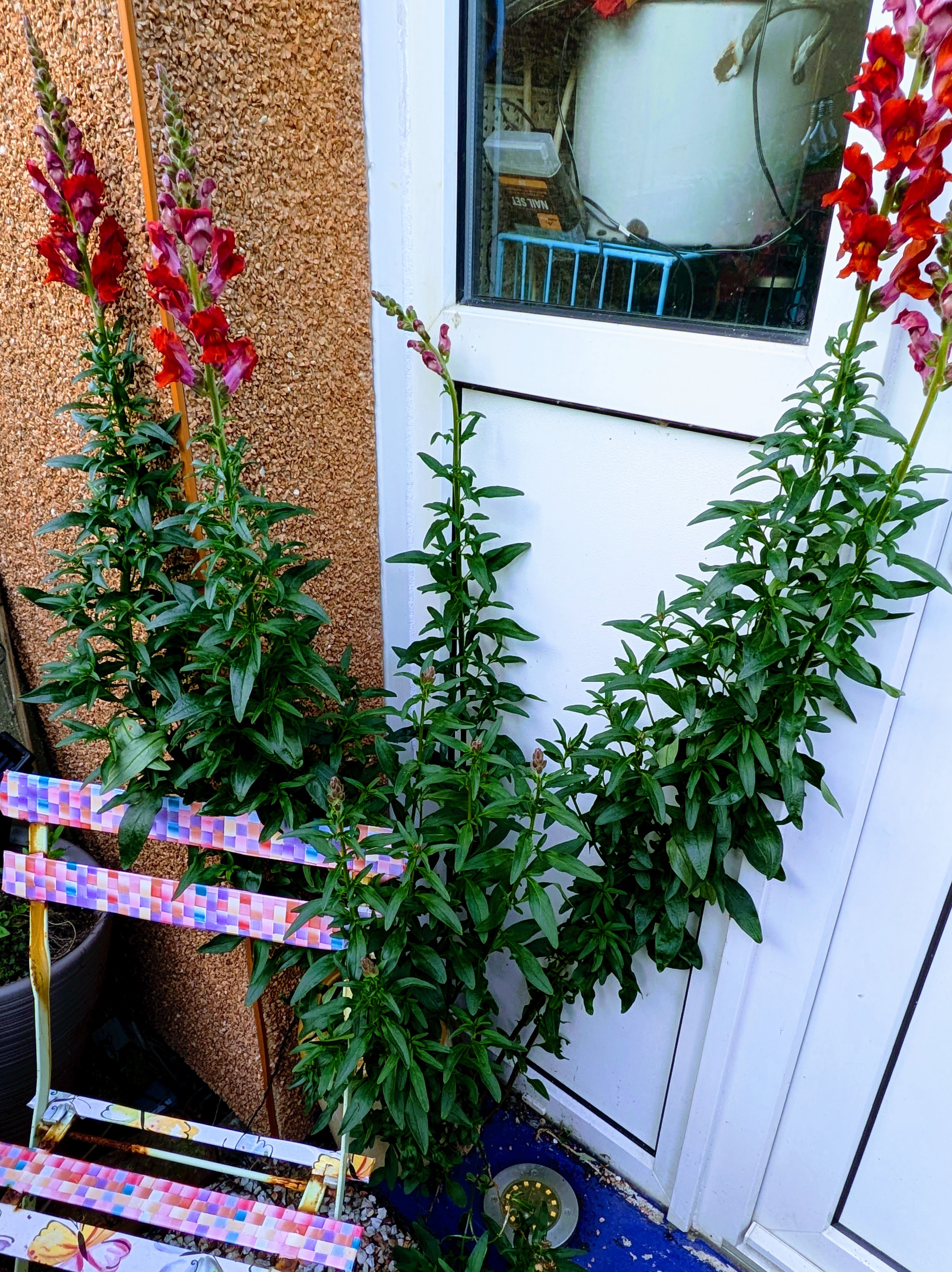
One of the good things about working in the community was chatting to the patients about their gardens. During my time in the Rapid Response Team, to prevent hospital admissions I visited quite a few patients to administer intravenous antibiotics. Most of these drugs were infused over 30 – 60 minutes so there was plenty of time to talk all things plants. One particular chap had a lovely garden and had the most pretty snapdragons amongst the array of beautiful plants. When I returned the following day he had very kindly bunched up a few cuttings for me to take away. They bloomed happily for quite a while in a pot by the back door until, presumably, they died off.

Or so I thought! This spring I noticed something green springing from the back door step. As the season moved on the little crop grew rapidly until it was obvious that the snap dragons had not died off at all. They had apparently taken steroids, taken root in the concrete and erupted into these massive beautiful blooms.

Nature really is miraculous.
In the footsteps of gladiators

As I have already alluded to with many posts in this blog, I am an classical history nut. I love nothing better than wandering ancient ruins and learning about the history. I was having a bit of a mooch around a well known search engine and discovered that there are 10 Roman amphitheatres in the UK according to Heritage Daily.com. Armed with my list, I did my research and made plans to visit each arena, last week I completed my quest.

But before I write about the sites I visited I thought I’d just say a few words about the amphitheatres I didn’t travel to. I live in Bristol in the Southwest so I needed to weigh up if the journey was going to be worth it, to that end I checked out the photos taken and posted by previous visitors.

In Chichester, it’s roman name Noriomagus Reginartum, there is nothing but a field with a gentle bank that outlines where the arena once stood.

Near Margate in Richborough, known in Roman Britain as Rutlipiae or Portus Ritupis, is also essentially a field but this time with a hollow marking the spot where the amphitheatre once was.

Much as I love a good day out, I figured it was a long way to travel to see a field when I had no other reason to visit, so I was content to look at the photos and read a bit more about them online.

My quest began by happenstance well before it was a conscious decision to do so. In January 2018 while on a family get together at my cousin Amelia’s house in Reading, we went on a bracing walk after Sunday lunch and had a wander around the amphitheatre at Silchester. It was built around 60 to 85 ACE when the town was called Callera Atrebatum and was one of the earliest arenas built in Roman Britain. It stood just outside the city walls of a large Roman town with the usual street grid format over 40 hectares. Although I have always been interested in ancient history I never really fully appreciated this look around which is reflected in the rubbish photos I took!

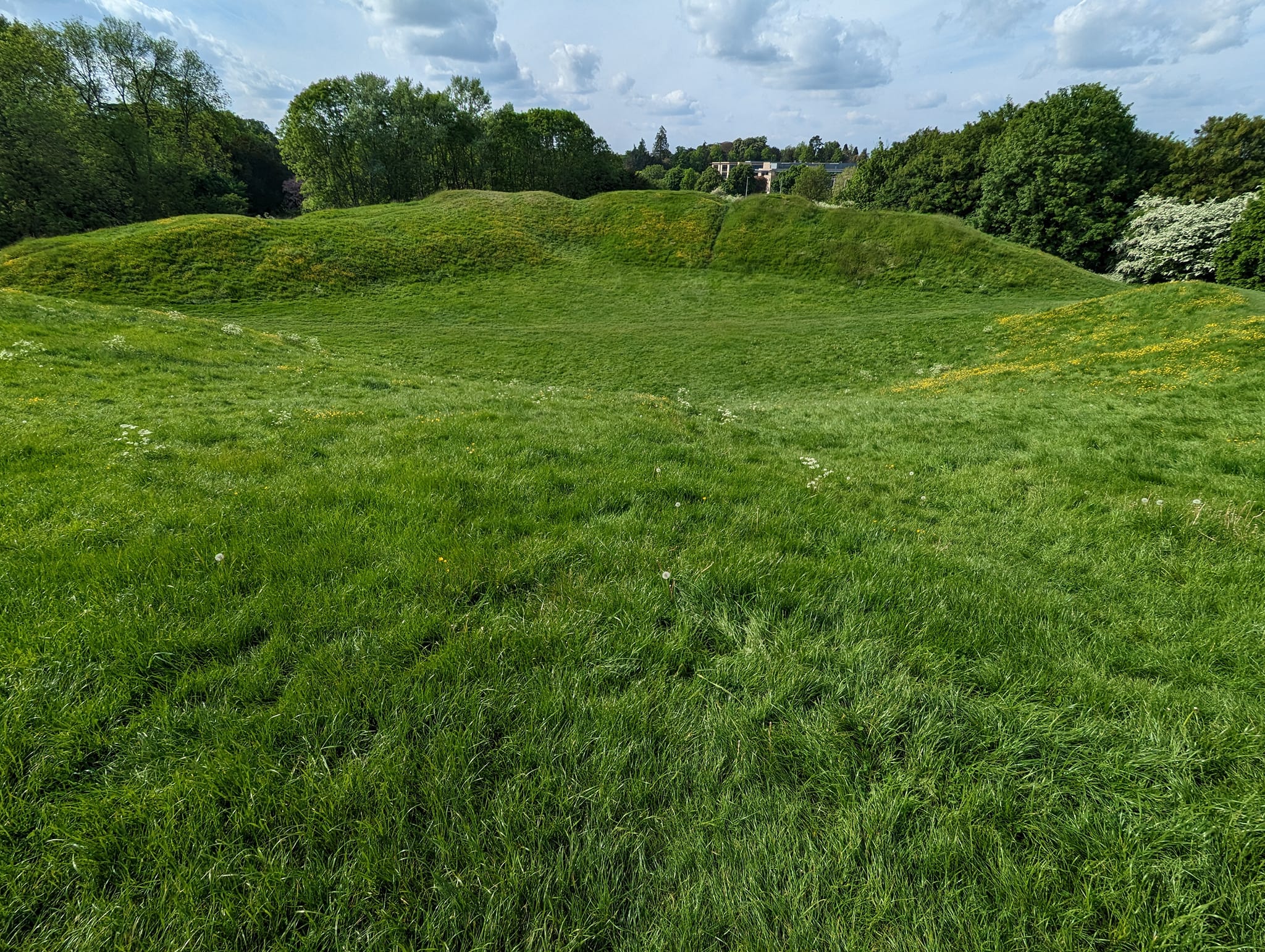
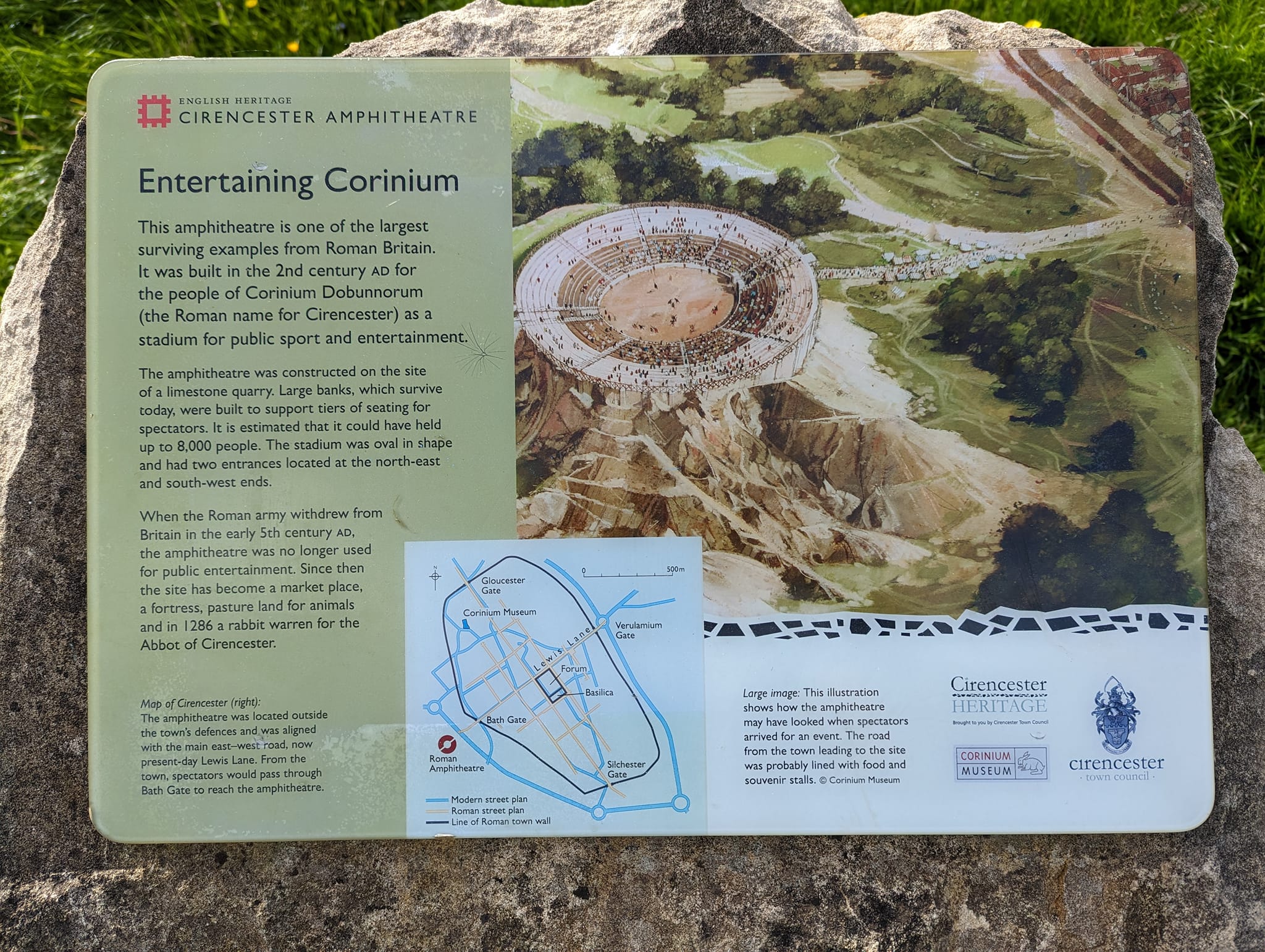
The next theatre that I visited by chance was at Cirencester. My mum and I had been on a lovely day out to Bourton on the Water and on the drive home I didn’t realise that I would be driving past the site. The arena was on my hit list but I hadn’t planned on checking it out on that day. I saw the sign for it and took my chance to cross another arena off the list. Built in the early 2nd century ACE it was one of the largest amphitheatres in Roman Britain. The city was known as Cornium and had a population of over 10000 inhabitants. The remains are massive earthworks but you can clearly see the size of the arena and imagine how it would have looked in it’s former glory.

Next stop Dorchester, London and Chester aka Durnovaria, Londinium and Deva Victrix….