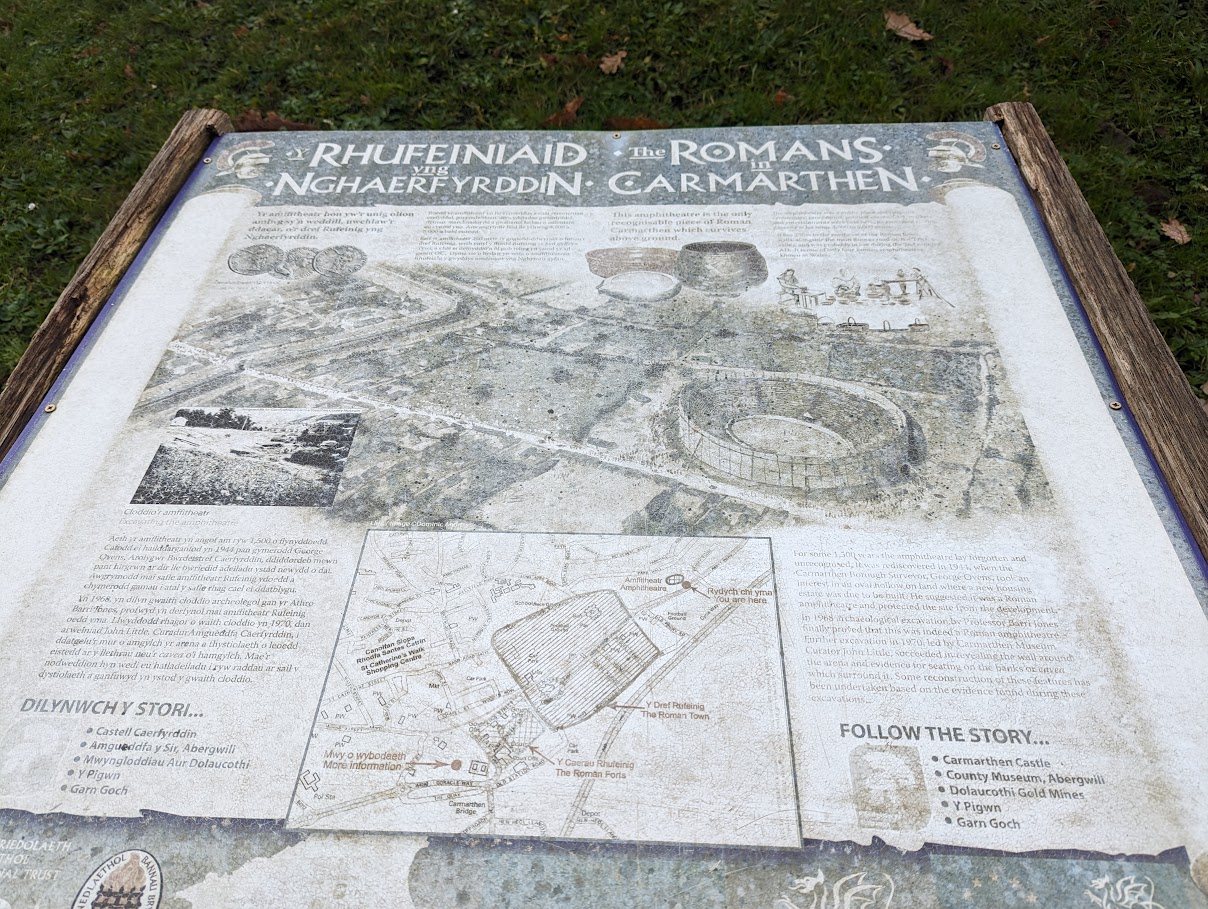
My final three arena visits were solo trips. I travelled to the land of my grandfather for the two amphitheatres located in Wales. The Romans moved into this fabulous part of the UK around 48 ACE, but it wasn’t called Wales then, just a part of Britannia Major. My first port of call was Carmarthen in the South West of the country, known in Roman times as Movidurium, it’s possibly the arena that’s furthest west from Rome. Only half of the original structure is visible nowadays, but built in the 2nd century ACE it was an elliptical shape with the capacity for 4500 – 5000 spectators.
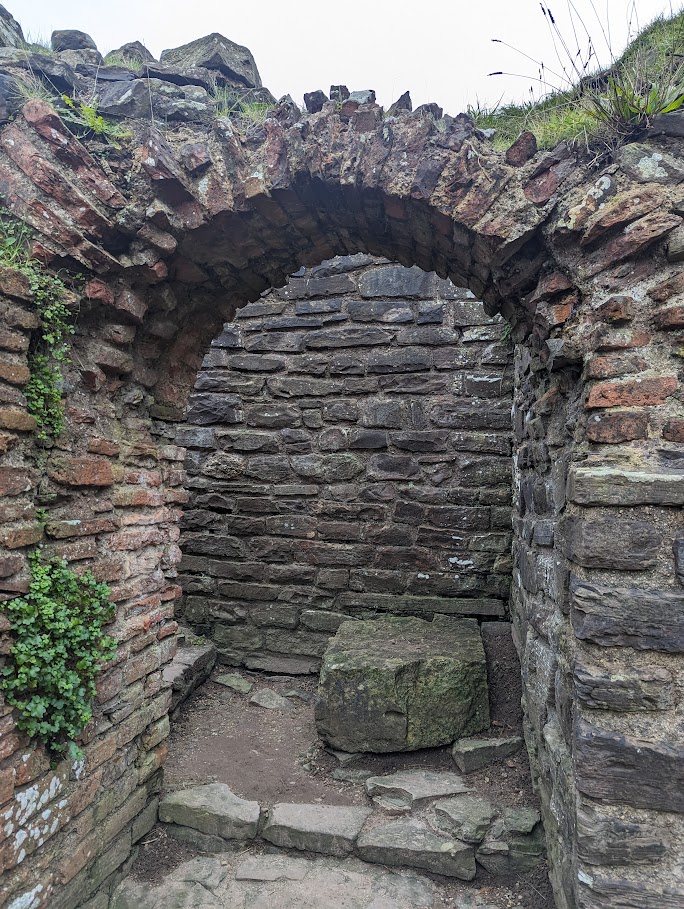
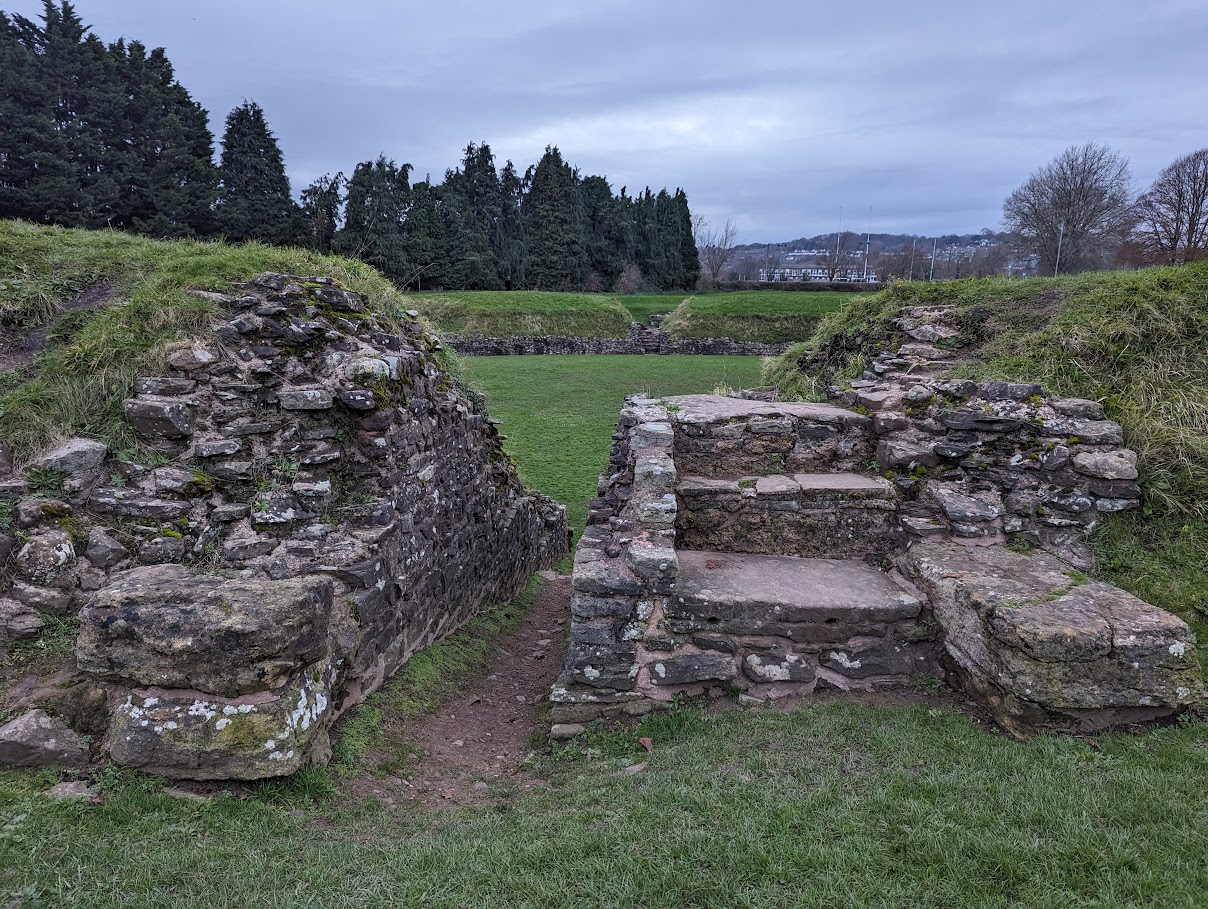
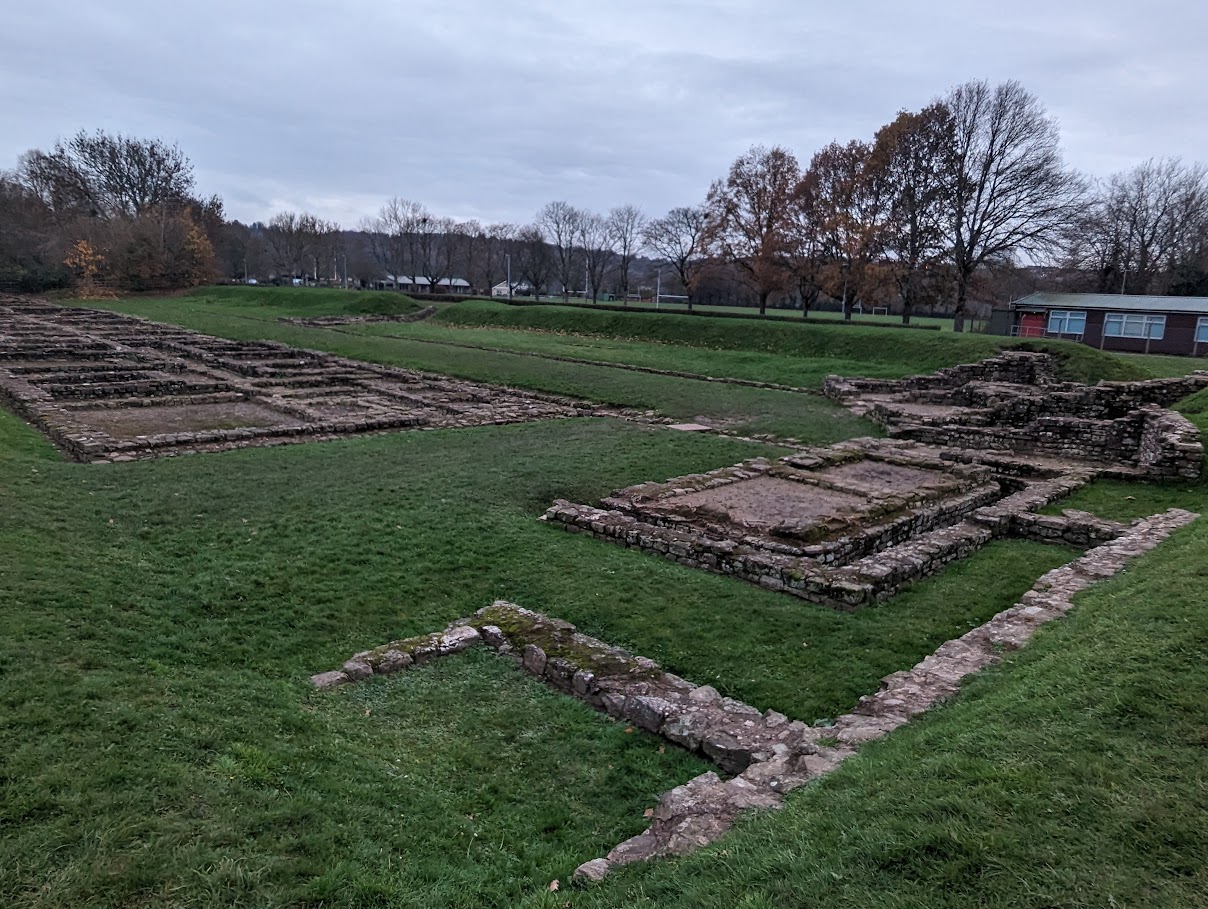
After a little wander around I made my way back east towards Newport to visit a little town called Caerleon, this was the home of the 2nd Augustan legion and 5000 soldiers were based there. The site named Isca Augusta had a very impressive amphitheatre, built around 90 ACE and big enough for 6000 spectators. I have to say up to that point it was the best preserved arena I had visited, there were lots of steps, tunnels and archways to explore, it’s the most complete amphitheatre in the UK. After a good look around I wandered down to the remains of the legionnaires barracks. There is a museum and remains of the Roman baths, unfortunately I left it too late to visit so I will definitely return for a proper look.
For the very last amphitheatre on my list I headed back to London where I based myself for my visit to St Albans. When I first planned my quest I wasn’t going to go there as the arena isn’t strictly an amphitheatre, as it has a stage at one end. But it is the only one of it’s kind in the UK so it’s very worthy of a visit. Just a 20 minute train journey from London the Roman town of Verulamium lies in the centre of beautiful St Albans. The arena was built around 140 ACE and it now lies in the Gorhambury Estate, so it was the only site I needed to pay to see, but it was worth the very small fee. It’s position is alongside the famous Watling Street that ran from Londinium to Deva Victrix, ( London to Chester), and it had a capacity of 7000 spectators. After a wander around I also checked out the hypocaust with a beautiful mosaic and a mooch around the museum with a group of very unruly school children and their harassed teachers.
So that is my UK Roman amphitheatre quest finished and I have thoroughly enjoyed it. I love how reading a random post can generate a planned trek around my country to discover the history but also incorporate it into mini breaks with friends and family.
Stay tuned to discover what my next quest will be …
As I have already alluded to with many posts in this blog, I am an classical history nut. I love nothing better than wandering ancient ruins and learning about the history. I was having a bit of a mooch around a well known search engine and discovered that there are 10 Roman amphitheatres in the UK according to Heritage Daily.com. Armed with my list, I did my research and made plans to visit each arena, last week I completed my quest.
But before I write about the sites I visited I thought I’d just say a few words about the amphitheatres I didn’t travel to. I live in Bristol in the Southwest so I needed to weigh up if the journey was going to be worth it, to that end I checked out the photos taken and posted by previous visitors.
In Chichester, it’s roman name Noriomagus Reginartum, there is nothing but a field with a gentle bank that outlines where the arena once stood.
Near Margate in Richborough, known in Roman Britain as Rutlipiae or Portus Ritupis, is also essentially a field but this time with a hollow marking the spot where the amphitheatre once was.
Much as I love a good day out, I figured it was a long way to travel to see a field when I had no other reason to visit, so I was content to look at the photos and read a bit more about them online.
My quest began by happenstance well before it was a conscious decision to do so. In January 2018 while on a family get together at my cousin Amelia’s house in Reading, we went on a bracing walk after Sunday lunch and had a wander around the amphitheatre at Silchester. It was built around 60 to 85 ACE when the town was called Callera Atrebatum and was one of the earliest arenas built in Roman Britain. It stood just outside the city walls of a large Roman town with the usual street grid format over 40 hectares. Although I have always been interested in ancient history I never really fully appreciated this look around which is reflected in the rubbish photos I took!
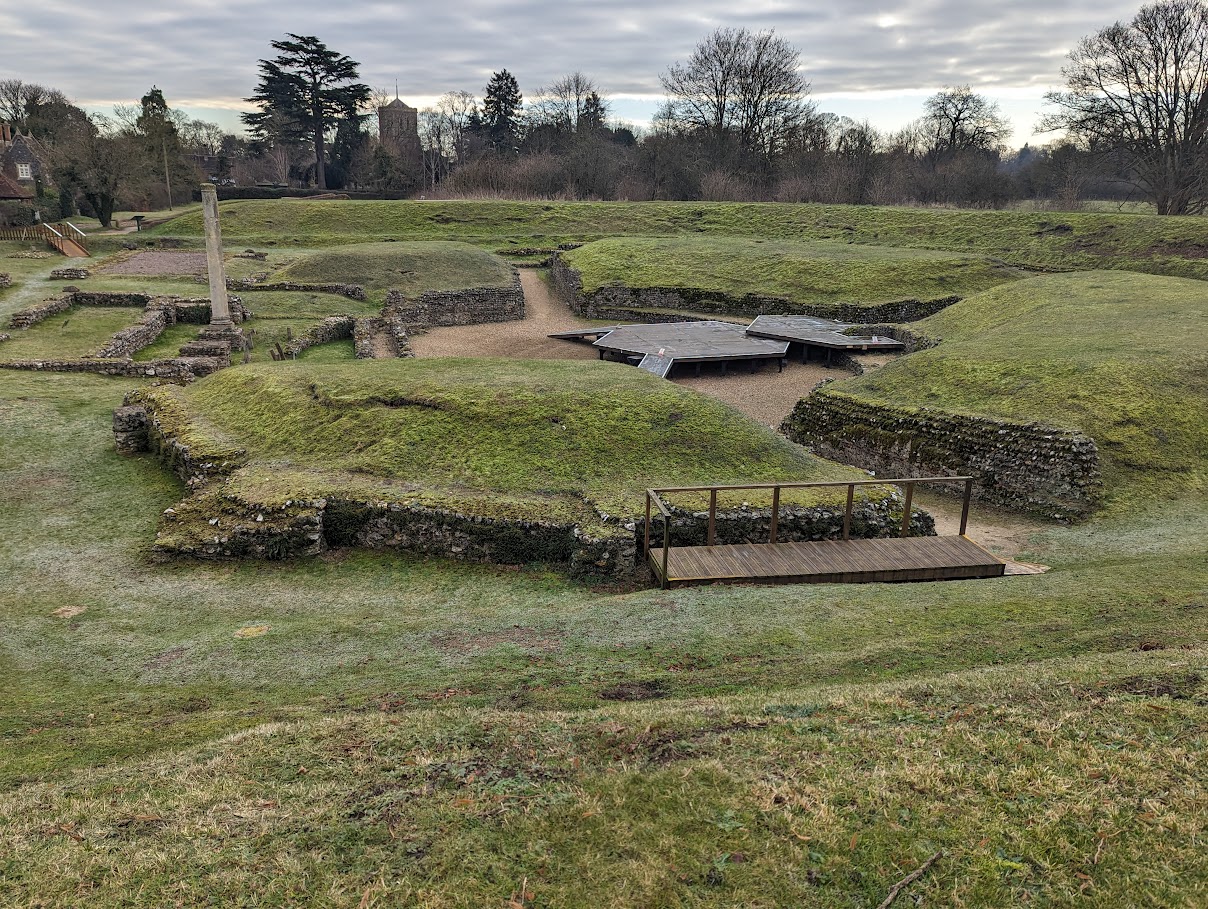
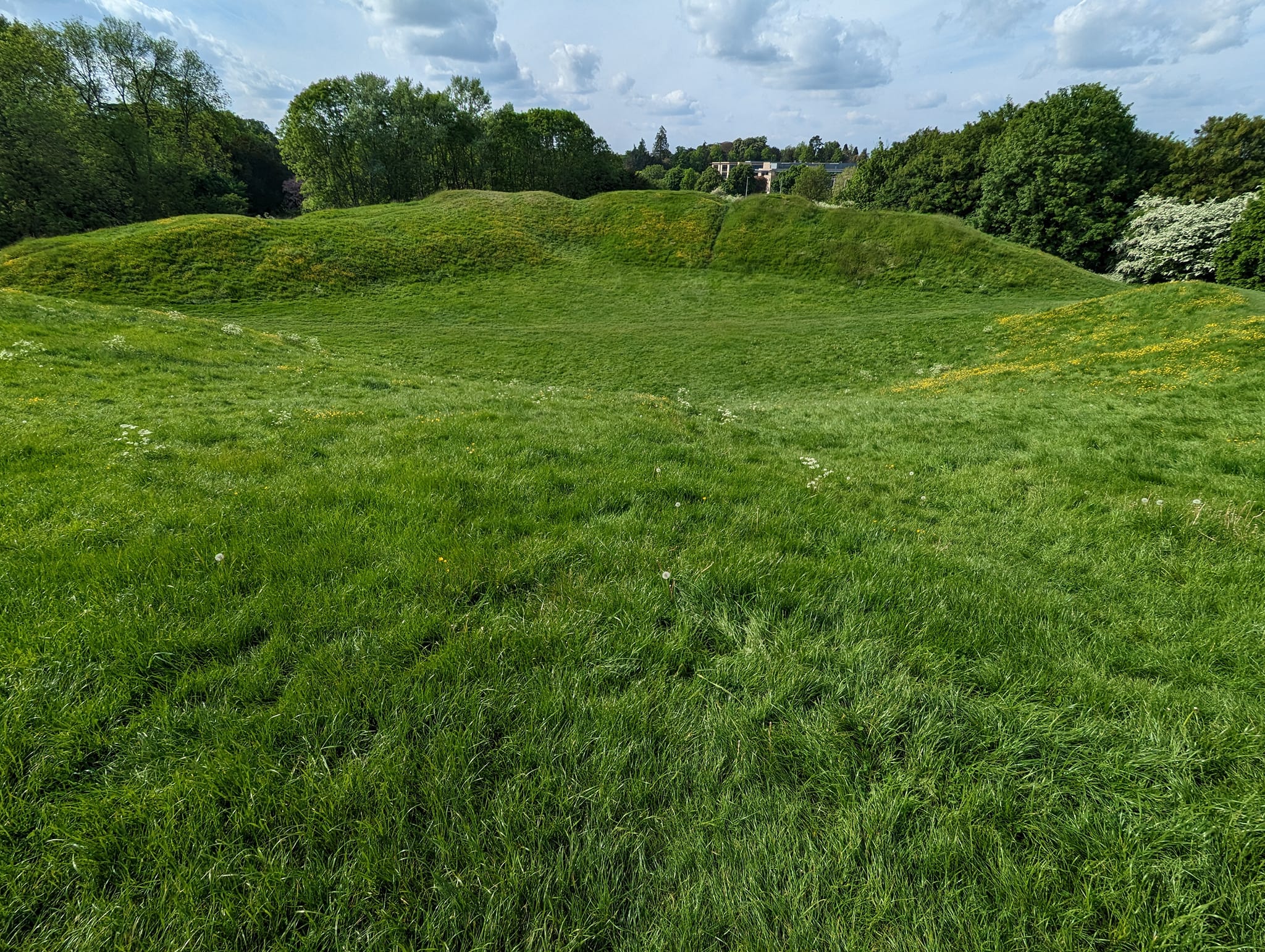
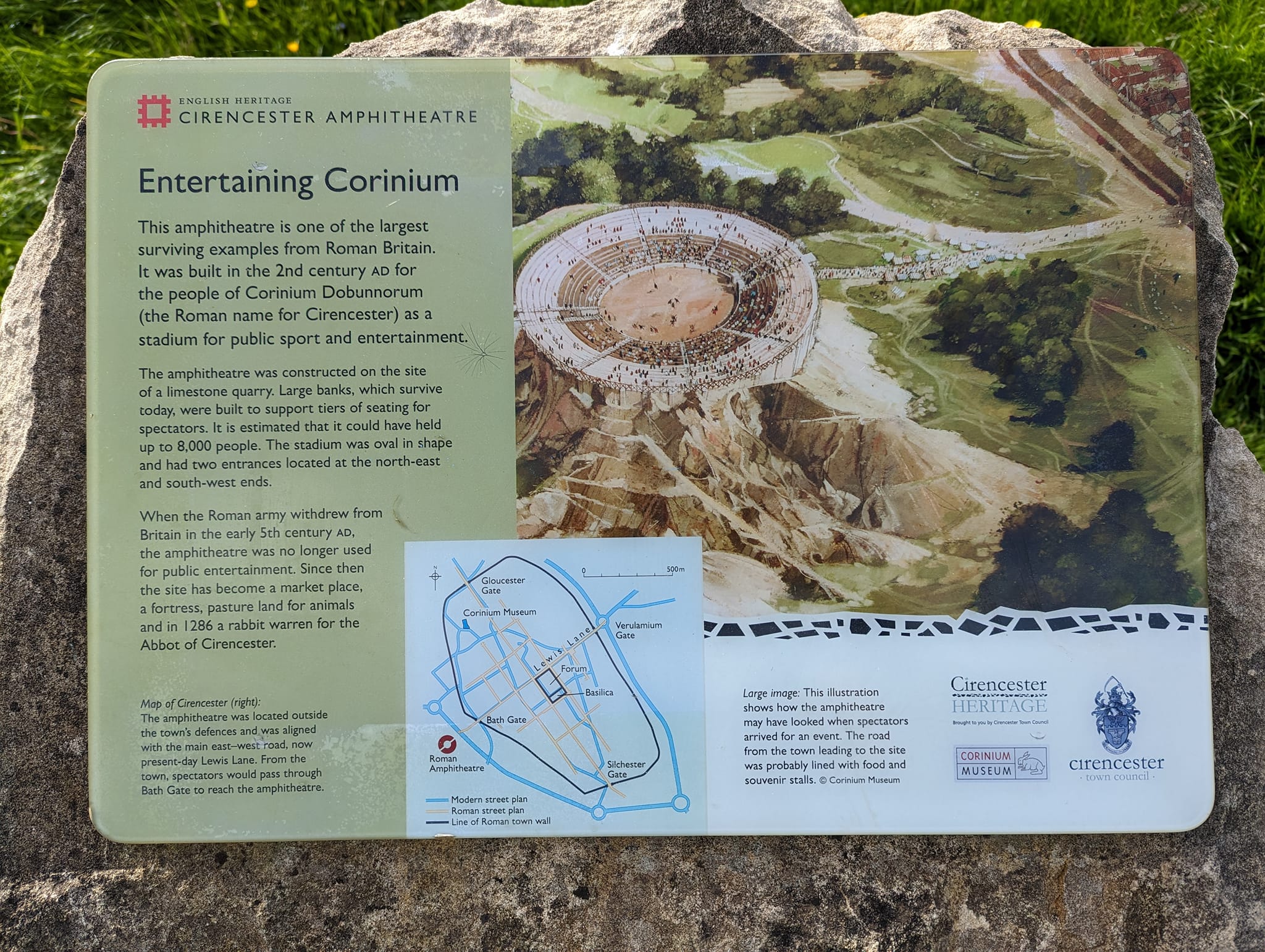
The next theatre that I visited by chance was at Cirencester. My mum and I had been on a lovely day out to Bourton on the Water and on the drive home I didn’t realise that I would be driving past the site. The arena was on my hit list but I hadn’t planned on checking it out on that day. I saw the sign for it and took my chance to cross another arena off the list. Built in the early 2nd century ACE it was one of the largest amphitheatres in Roman Britain. The city was known as Cornium and had a population of over 10000 inhabitants. The remains are massive earthworks but you can clearly see the size of the arena and imagine how it would have looked in it’s former glory.
Next stop Dorchester, London and Chester aka Durnovaria, Londinium and Deva Victrix….
Fuelled by the success of my roman adventure I decided to go it alone again, this time to a city I’ve been wanting to visit for a very long time. For someone who loves ancient history as much as I do, there is only one place to go to get my fix, Athens.
I couldn’t think of a better place to go on my own, I would have the time to go wherever I want and spend as long as I needed. I am that person who reads every bit of information at every site, so I can spend hours in one place learning as much as possible. When travelling with others who aren’t quite as fanatical about history I’m always conscious of staying in one place for far too long. I can also go for ages without eating or even needing a wee and I can walk for hours, so I guess it can be a bit frustrating for my companions at times and equally so for me when it’s necessary to stop more often then I’d like to. So the best solution is a solo trip.
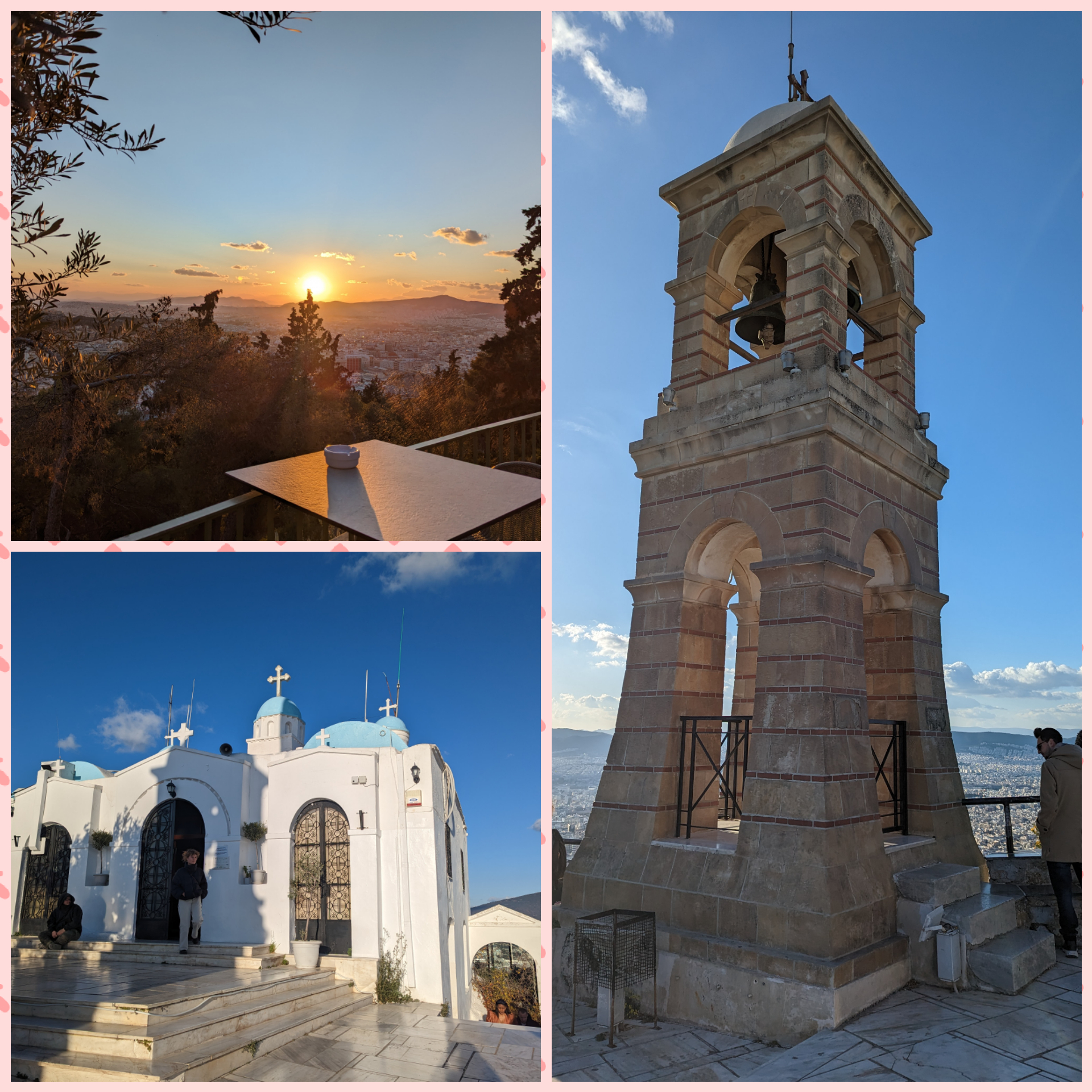
Athens is a very walkable city, with interesting sites galore. I got started right away after buying a week’s supply of tomatoes, cucumber and feta and despite a very early flight I felt compelled to march up the Philopappos Hill as it was a short walk from my apartment. I read that the summit afforded an amazing view the acropolis and the rest of the city. It most certainly did and it was well worth the effort.
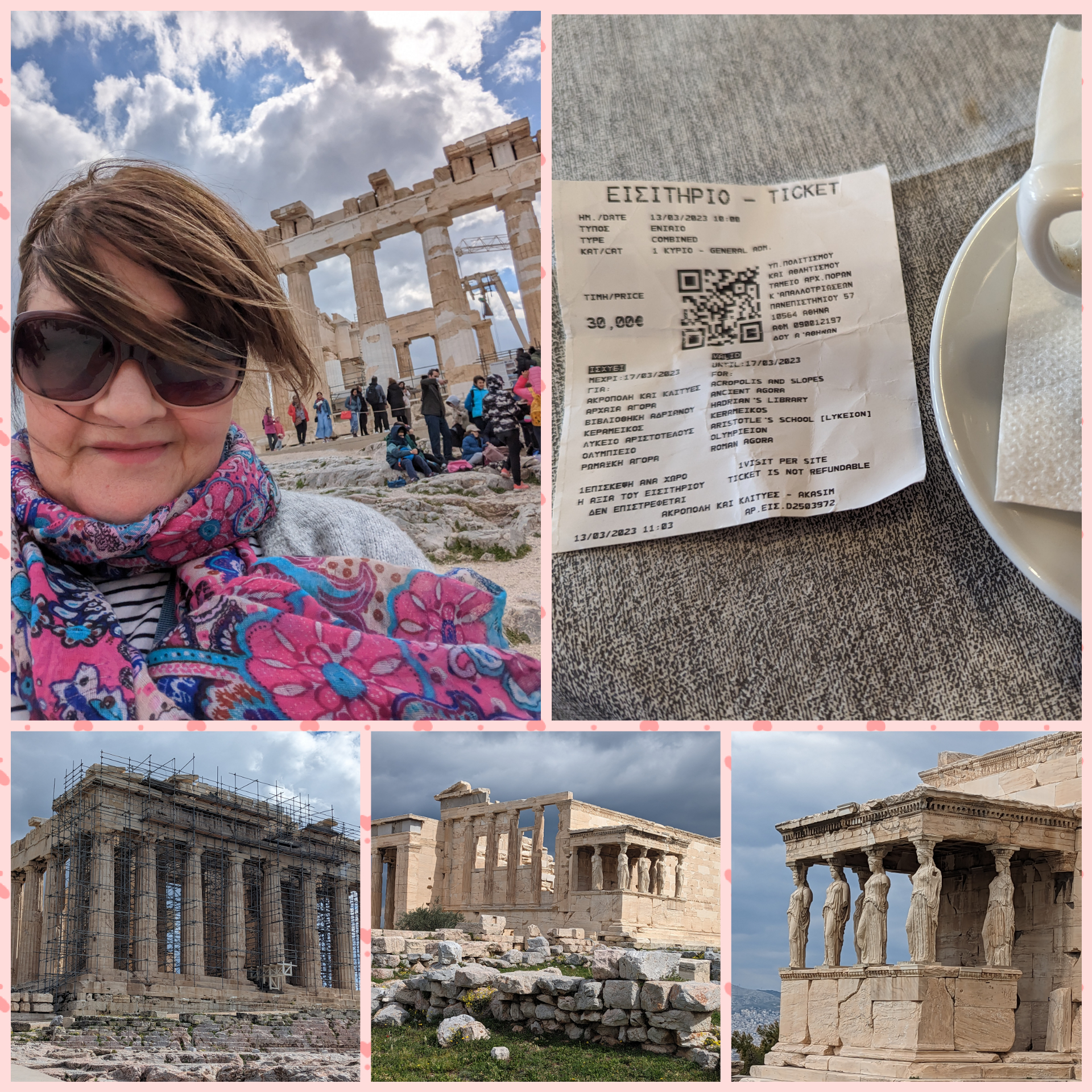
The most recognisable place in Athens is the Acropolis, so the next day I couldn’t wait to get there. Imagine my joy to discover that I could buy a ticket not only to this magnificent site, but also included in the price entrance to the Roman and Ancient agora, Hadrian’s library, Kerameikos, Aristotle’s school and Olympieion.
So for the next few days I worked my way around the city making the most of this ticket. But also visiting many other amazing places such as the temples of Zeus and Hephaestus and Herod Atticus Odeon,
Not content with scaling one large hill I decided to tackle Mount Lycabettus, but after a morning of walking many steps and a stop off at the glorious marble Panathenaic stadium, the thought of climbing up the winding path of the 908 feet high hill was a little too much for my screaming muscles and throbbing feet. So I thought I’d make use of the funicular to get to the summit and enjoy the stunning views and beautiful sunset with a chilled glass of wine.
On day 3 treated myself to an organised trip out of the city and found myself in a small minibus with 12 strangers and a very informative guide heading down the coast to the Cape of Sounion to visit the Temple of Poseidon. After a pit stop at the Vouliagmeni lake, where it’s said the water has healing powers and can relieve ailments such as arthritis, we ended up at the peninsula with the breath-taking temple standing tall over looking the beautiful turquoise sea. We had plenty of time to look around the site and surrounding area before getting in position to get the best photos of the sunset behind the temple. This excursion is not to be missed and I highly recommend it if you love capturing beautiful sunsets in stunning places.
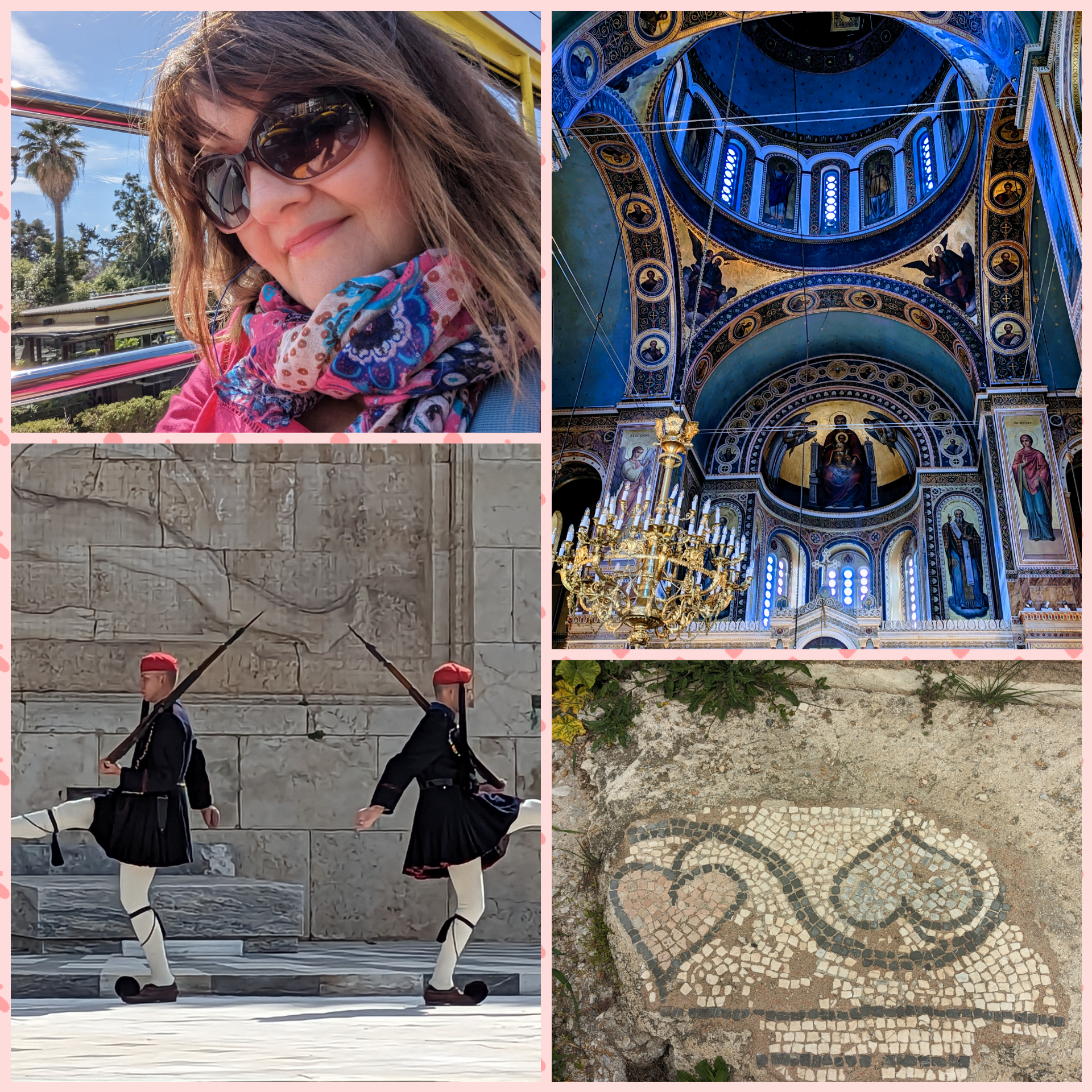
On my last day I made use of the hop on hop off bus ticket that was included in the price of the trip to the Temple of Poseidon. I hopped on after paying a visit to the tomb of the unknown soldier and watching the guards doing their thing with style. I managed to cross a few more sites off using my multi-site ticket and checked out the church of Agios Elftherios and Athens Cathedral right next door, before the rain set in and the pavements that were slippery when dry became treacherous when wet. Anyone who knows me, knows about my tendency to fall and break limbs, so I decided to go back to my apartment for my own safety. I hoped that the rain would go off so I could get back out as there were a few more places I wanted to see, but it was set in for the rest of the day.
Then the miracle happened, in the form of an email from Easyjet, my flight had been delayed by 2 days. Unfortunately there was someone booked to replace me in my apartment so I needed to find another temporary home for the next night, but that was swiftly done on a well known booking site. The next morning, after dumping my bag at my new lodgings, I was off again to make the most of my extra time.
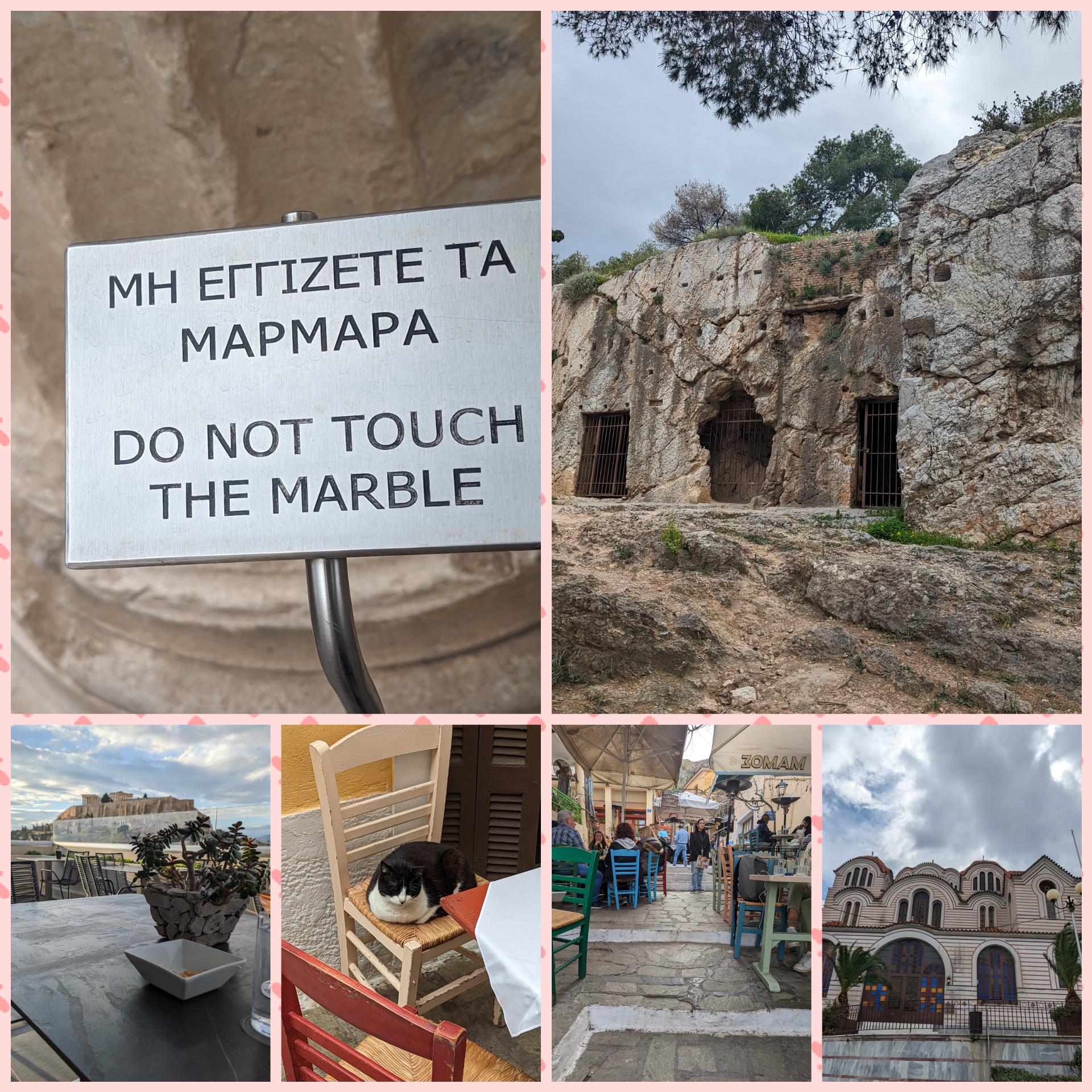
I couldn’t resist another visit to the Acropolis before exploring the other side of Philopappus Hill, where I found the tomb Socrates was incarcerated in before his trial in 399 BCE and the hill of the Pynx where the great orators Aristotle, Demosthenes, Pericles and Themistocles addresses assemblies in the 5th century BCE. After a meander down the hill and a nose around some beautiful churches I had a well earned late lunch on the Yiasemi staircase, lined with brightly decorated cafes where if you can’t find a table you just pull up a cushion and sit on the stairs.
Thanks to an evening flight the next day I was able to visit the presidential palace, the Byzantine museum and gardens, and the beautiful national botanic gardens. A visit to Aristotle’s school completed all of the sites on my acropolis ticket.
I’m so happy I decided to visit Athens for this fabulous trip and although I went on my own I was never far from familiar people. On my second day, in the chapel of Agios Giorgios on the top of Mount Lycabettus I met a couple wondering if they still held weddings there, I happened to know the answer to that question as I had read about it the previous day, so we had a bit of a chat. The following day they were also on the trip to the Temple of Poseidon, then the next day, while I was sat on the hop on hop off bus in a bit of a traffic jam, I saw them walking along the street so we had a catch up while the bus waited to move off.
Athens is the most amazing place to visit on a solo trip as I felt very safe at all times and there is so much to see and do that even if you stayed for a couple of months you wouldn’t see it all. So I will definitely return and maybe even bring a friend!
Much as I love travelling with family and friends, I really wanted to do some solo trips and thought that Europe was a good place to start.
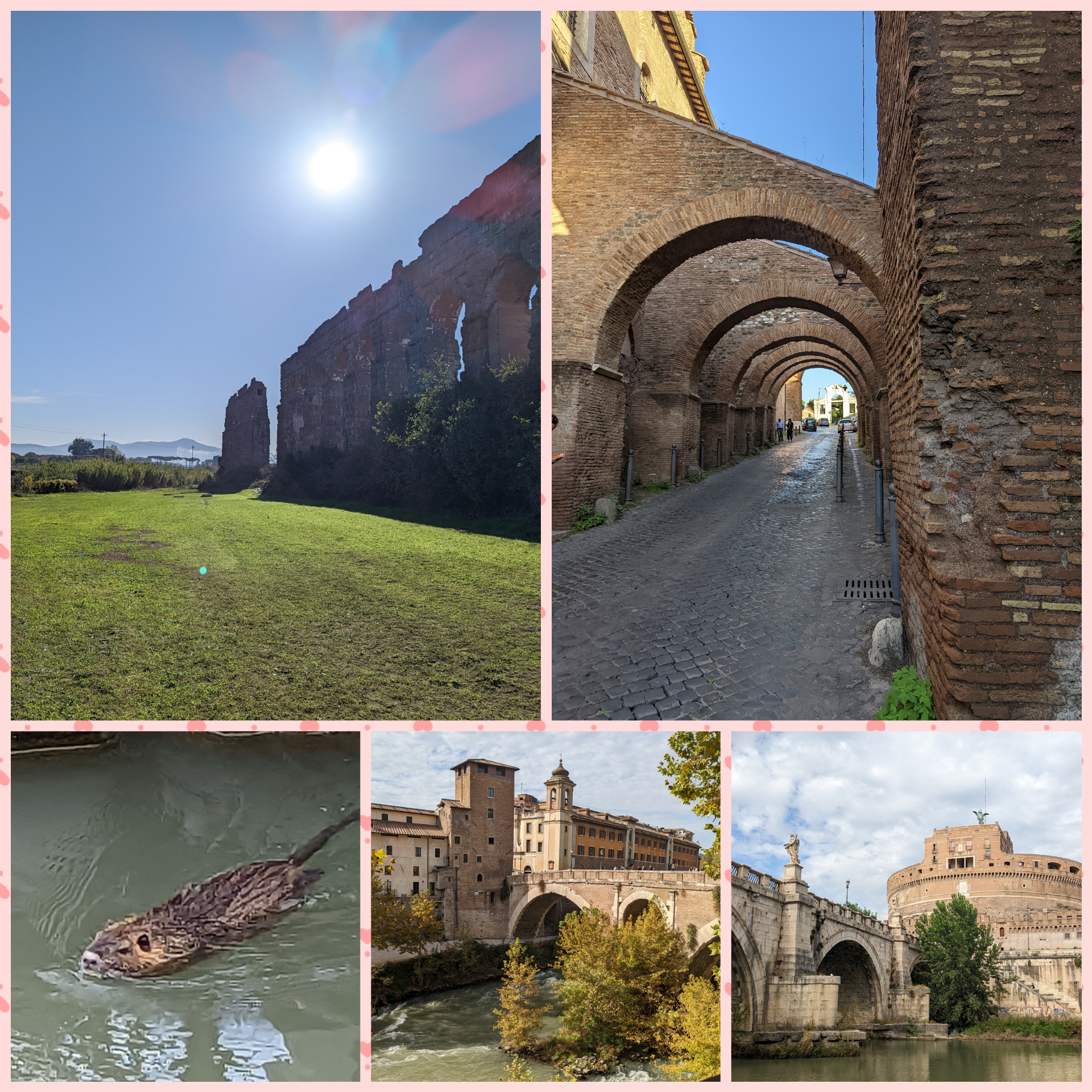
For my first solo adventure I decided to go to Rome as I had visited many times before and knew my way around pretty well. That said I did make a conscious effort to visit places that I hadn’t seen before on previous trips, including the aqueduct park, the catacombs, Tiber Island, Trajan’s market and Circus Maximus. I went on a lovely boat trip and met the very cute resident coypu named Caterina. But also visited old favourites; the Pantheon, Piazza Navona, Castel D’Angelo and St. Peter’s Square.
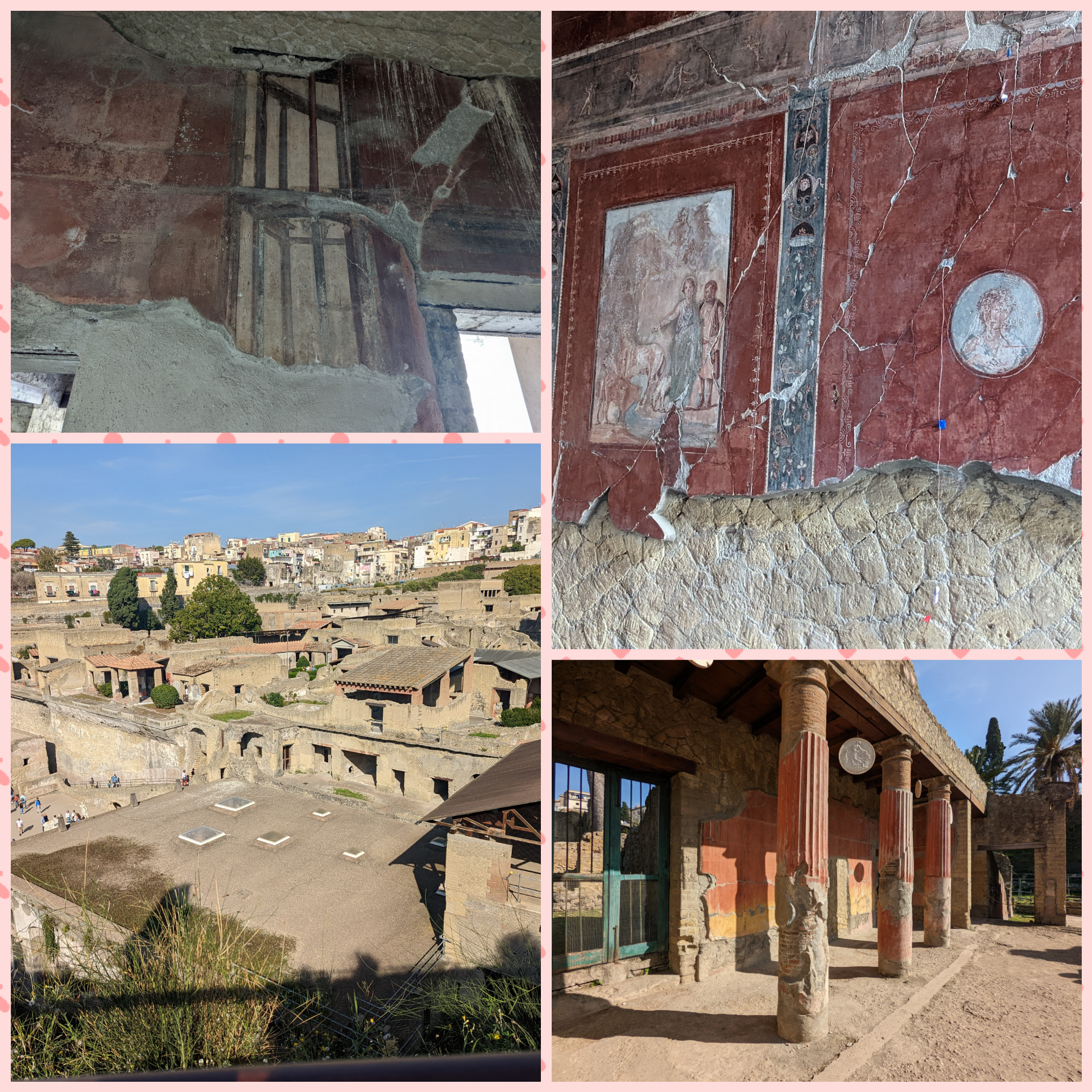
On all my previous visits to Rome I have gotten out of the city, I’ve been to Pompeii and Ostia Antica twice. Anyone who knows me or has read this blog will know what a history nut I am. So I hopped on the train to Naples to catch the little circumvesuviana train to Sorrento with a little pit stop at Ercolana to visit the ancient city of Herculaneum. I’ve wanted to see this site for many years and it didn’t disappoint. Just a little walk from the station down the main street of the small town is the most compact and perfectly formed roman city. The streets, houses, shops and port are so amazingly well preserved, partly to do with it’s position in relation to Mount Vesuvius, so it faired a little better than it’s neighbour Pompeii. I loved wandering around and looking at the fabulous murals on the walls, the colours still quite vibrant even after all these years.
Onwards on the most scenic train journey for another couple of hours I made my way to beautiful Sorrento, another place on my hit list for quite some time. Due to my stop off at Herculaneum I only had a couple of hours at this lovely coastal resort, but long enough to enjoy a bit of a walk around and some gnocchi and a glass wine while watching the glorious sunset.
Originally I had only planned to go to Herculaneum and back to Naples for a look around, but when I got off the train from Rome and walked to the station to get the next train it smelt so strongly of urine that I decided to go further down south to Sorrento. I’m sure it was a one off and Naples is a lovely place to visit, I just didn’t fancy it that day!
A short time before my holiday I had already been informed by Easy jet that my flight was delayed and I had an extra day in Rome, luckily my Air BnB hosts were able to put me up for one more night. What I didn’t know though was my cousin Amelia and her family, Ged and Sophia, were also going to be arriving in Rome on my last but one day. I found out when I posted online while sat on the tarmac at Bristol Airport, Amelia saw it and messaged me. So after a morning of mooching around the site of Nero’s Golden Palace and the Roman Forum, I met them at their hotel on the Via Nationale. After sharing a pizza and trying to catch up on a lot of family gossip, we made our way to have a look at the mighty Coliseum. We enjoyed a lovely evening together reminiscing about the last time we met up in Rome, another totally unplanned event when we both decided to come to Italy as a birthday treat quite a few years ago, my birthday is the day before Amelia’s. She was staying outside of Rome that time with my Uncle and Aunty and we all met at the Spanish steps.
The next day I managed to fit in the Trevi fountain, the Spanish steps and one last coffee with Amelia and co before making my way to the airport for my flight home. We decided that Rome was some kind of special place for us and I believe that is true, I really feel comfortable there and felt safe all the time, even when I was returning to my apartment late at night.
This week I went on a night out with my friend Jane, she had a wild night planned for me at a talk in her local second hand book store in Clevedon. Given that I have been on quite a few dodgy outings with Jane over the years I must admit I was a bit dubious about this latest excursion. Several years ago she dragged me along to a cosmetic event, but instead of getting lots of freebies we were listening to a talk about the best lip salve to use in the arctic circle. As we weren’t planning a trip to the North pole, we made a run for it at coffee break and didn’t look back.
As the book store is so quaint and I’m planning to do a creative writing course there in January I though I’d better support it. The speaker was a local historian called David Milner and he gave a talk about local men who served in the Battle of Waterloo in 1815. He had some very interesting tales but the one that stood out for me was the tale of Joel Fisher. He came from Weston Super Mare in Somerset and returned there after the Battle of Waterloo and opened a pub with his wife. All seemed well in their lives until they started taking in lodgers, the rent started disappearing and Joel blamed his wife. One night after a violent argument he took an iron bar bludgeoned her over the head, not convinced the job was done he then went down to the kitchen and returned with a knife and slit her throat. His hanging was a public event and nearly 5000 people turned out to watch his demise. Many locals had said that when Joel had returned from the war he didn’t seem the same and acted erratically, according to our speaker this could have been the earliest reference to battle fatigue or as it’s now referred to as post traumatic stress disorder.
The whole talk was very good and David was obviously very knowledgeable about local history and I’ll probably go to more of his talks in the future.
The moral of this story….. trust Jane’s judgement and go with the flow.
Another story from my recent visit to the Marmaris area of Turkey.
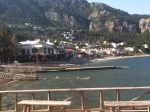
A lot of the time when visiting places of interest that we read about in brochures, we drive straight through other lovely places without stopping on the way. When we decided to visit the ancient site of Amos we also made a conscious decision to stop off at any little village or town that took our fancy. After travelling down a very steep and winding road through the Taurus mountains we came across the little seaside village of Turunç. The area was a continuous settlement from Helen to Byzantine times and from then on it’s been inhabited by many living off the the sea and the abundance of natural resources such as wild herbs and agriculture.
Now it is a pretty holiday destination, boasting beautiful clear waters, apartment hotels and a small but perfectly formed beach. It is still a working fishing village and has a food market every Monday. Dotted around the mountains there are blue boxes everywhere collecting pollen to make pine honey that is sold locally.
Our next trip to the ancient site of Cnidos took us through the town of Datça, we stopped there on the way back home. The town itself is not much to write home about and if you woke up there after arriving on a night flight you would think the travel agency was having a laugh sending you there on holiday. But after walking around a bit more we discovered a pretty harbour, 3 small beaches with beautifully clear water and a cake shop that serves the most lovely carrot cake. The Datça area boasts 9 villages scattered around the peninsula with lots of little bays and coves. It is also possible to take a ferry to Bodrum and the Greek island of Rhodes from the harbour. On the outskirts of the town there are a collection of old windmills, most of them are derelict but a couple have been renovated to make very quirky houses.
Our last port of call didn’t involve a stop off on route to another place, it was my last but one day so we just wanted to go for a drive somewhere. On the map I spotted what looked like a beach called Amazon, we followed a long winding road and ended up eventually at nothing really but a couple of wooden boating platforms. So we carried on around a dirt track that ran along the coast until it ended at the most beautiful bay in the Gökova National Park. There can be found the Amazon Club, a costly but interesting holiday centre with the best private beach.
There is still so much to see in the area and I can’t wait to explore some more, I’m planning another trip to see my hubby in May before I get stuck into the return to nursing course.
I love history, particularly ancient history and Turkey is rich in it. We were spoilt for choice in the area and managed to cover a great distance in our old convertible, even though the petrol gauge was broken and we never really knew how much petrol we had, so we had to carry a can full in the boot just in case we ran out in the middle of nowhere.
Our first port of call was Amos, a small hillside city near the village of Turunc. After a bracing and heart quickening hike upwards we were rewarded with the most spectacular views of the coastline, sea and mountains, it was truly breathtaking. All that remains of the city itself was the city wall, the amphitheatre and odd bits of stone such as statue plinths.
It’s thought that the city dates back to the Hellenistic period of history, 300 to 50 BC, and was inhabited until the Byzantine period. The amphitheatre would have seated 1300 people in it’s hey day, the first 4 rows are still almost intact and the orchestra area and stage are still well preserved.
It’s uncertain but historians believe the name from the Greek word αµµᴏҁ meaning sand.
For our next historical visit the next day we wanted to see the middle age castle at Hisaronu. But after finding the village and the beach that led to the castle road, we were disappointed to find out that the road leading up to the castle was blocked and we couldn’t go and see it.
Not to be put off we carried on around the bay and saw the sight known as Kiz Kumu, maidens sand. According to legend the daughter of the Bybassos king tried to escape from pirates but couldn’t swim so she filled her skirts with sand and put it in the water so she could cross the bay, but it got dark and she ran out of sand and drowned.
The remains of the ancient city of Bybassos can be seen on top of the island in the bay.
It was an amazing sight and we had a great day, the only downside was the daylight robbery at the marina club that charged us 26 lira for 2 teas and 2 coffees!!!!















 Carole Gardiner
 back to life