Places for stage and screen.

Number 2 – Acta Community Theatre

Deep in the heart of Bedminster in South Bristol is the home of a thriving community theatre group that is nearly 40 years old. I have been going to this theatre for many years to watch fantastic and original productions on a regular basis as my youngest son, Jake, belongs to the group and has been since he was a young teenager.

The groups are not afraid to tackle controversial and challenging subjects with well written, directed and amazingly acted productions. Also putting on Christmas pantomimes and other light hearted plays to entertain the Bristol public. The groups are a mixing bowl full of different ages and abilities and everyone works so hard to keep putting on fabulous performances.

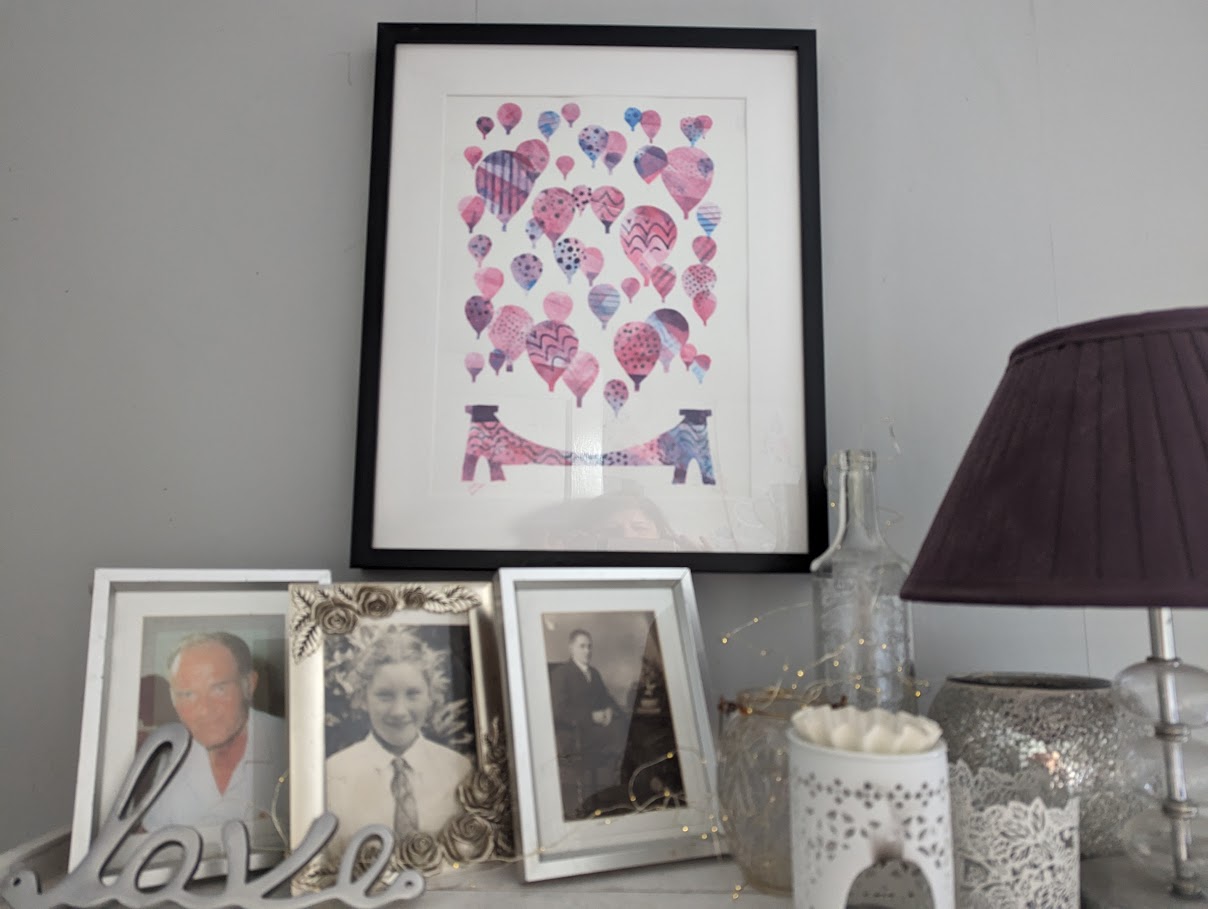
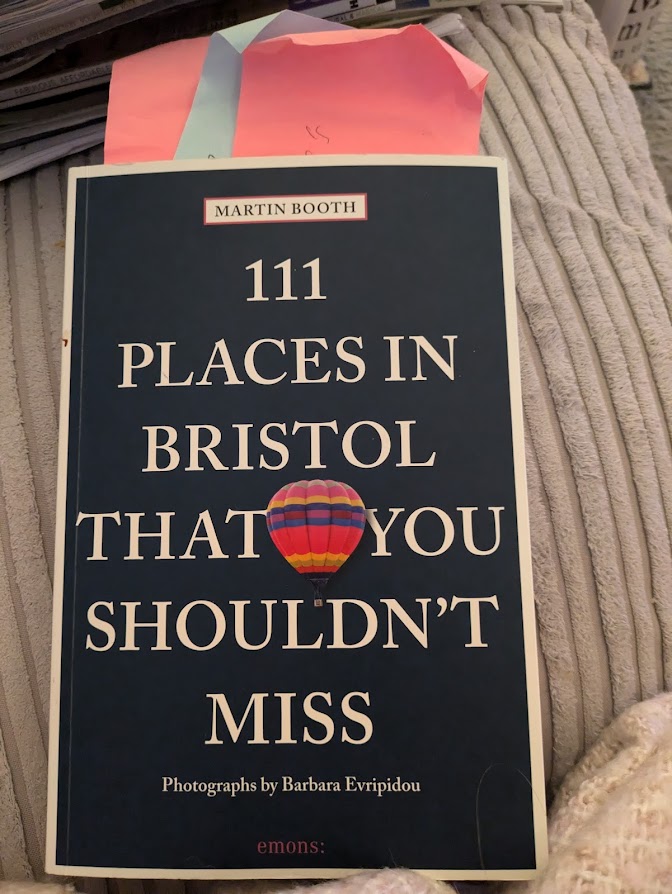
It wasn’t until I started planning this post that I noticed that the picture in the book had a photo of Jake on the wall, which I love.

Number 5 – Arnos Vale Cemetery

This cemetery near Temple Meads Station was first opened in 1839 and served the city of Bristol for many years for the burial and cremation of loved ones. A wander around the gravestones will reveal the final resting places of the great and the good of Bristol past, such as the survivors of the Charge of the Light Brigade.

In 2003 the city council took ownership creating a community hub with an event area and a café, regularly hosting weddings and other special occasions. The cemetery is a 45 acre haven for wildlife and if you look really closely at the foot of some of the trees you might find tiny doors for the fairies to come and go.

My son Jake and I found ourselves there last year to watch an outdoor showing of the 1980’s classic The Lost Boys, a very apt setting for a fabulous night with my lovely boy.

Number 14 – Bottle yard studio

Not far from my house and almost next door to my place of work lives the Bottle yard studios, this was formerly Harvey’s Bristol Cream where sherry was made and bottled for that traditional Christmas tipple. It is now the place where all sorts of TV and film productions are made. My absolute favourite coming out of these studios is Poldark starting the wonderful Aiden Turner, who I stood in line behind at a cashpoint in Bristol city centre, unfortunately he was chatting on his phone so I couldn’t say hello. I think Aiden dodged a bullet there and had a very lucky escape.

My experience of the studio was a few years ago when I got free tickets to be in the audience for Tipping Point – Lucky stars. Accompanied by my mum and my friend Deb, I joined a very long queue in the car park, mildly excited to watch some celebrities answering easy questions and dropping counters into a giant machine. We were almost at the final destination when an announcement was made to say there was no more room as the host, Ben Shepherd, had brought his family and they had taken up an entire section of the audience. So we never made it inside and went to a well known coffee shop chain for cake.

Number 52 – Goldney Hall Grotto

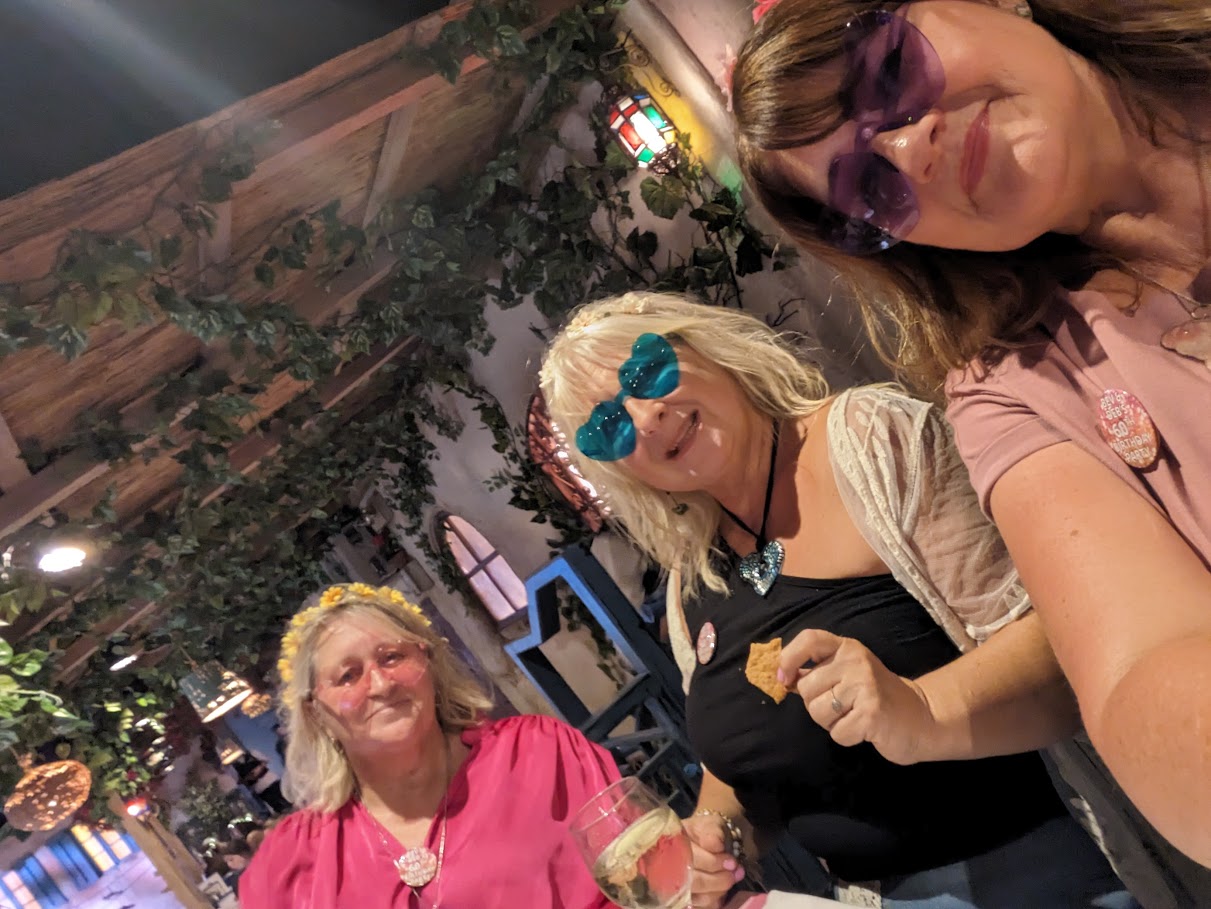
My bestie and I decided to be culture vultures and watch a production of my favourite Shakespeare play, Much ado about nothing, in the grounds of Goldney Hall. The backdrop for the performance was the beautiful orangery that started out as a rather posh greenhouse in 1714. The grotto was created by Goldney as he developed the gardens, the subterranean wonder is decorated with Bristol diamonds, iron rich quartz found around the city.

These days the orangery is used as an event venue, famously for Dr Watson’s wedding in the TV show Sherlock, where you’ll hear the best ever best man speech from the fabulous Benedict Cumberbach. On a more personal note it was also the venue for Jane’s daughter, Holly’s wedding, who joined us to watch the play. I didn’t visit the grotto on this occasion but I will return at some point to take a closer look.
Big birthday, big challenge.

Following the success of my 50 Fabulous things in a year to celebrate my 50th birthday, I have decided to mark the occasion of my big 60, (coming up in 2 1/2 years), by completing a list of 60 things. The 60 by 60 list is a mixture of new skills to learn, experiences I’ve yet to have and places I’ve been meaning to visit but haven’t got around to yet.

I made a start at the end of summer and I’ve already ticked off quite a few things, but before I start writing about my experiences so far I thought I’d share a few posts about the fair city I call home.

About a year ago I bought this book 111 places in Bristol that you shouldn’t miss. Having lived in Bristol for the majority of my life you would think that I had seen it all. But after an initial flick through the pages, I discovered there are quite a few places I either wasn’t aware of, or knew about and have never checked out.

But in the last 57 years I have managed to cobble together a few experiences I think may be worth sharing with my merry band of followers and some of them overlap with the 60 by 60 theme. I have added the book to my list of 60 things to try and visit the remaining places in the book.

The Miracle of Nature

I love gardening and I spend a lot of my spare time visiting garden centres, pottering around my garden and generally trying to make room for the plants I feel compelled to buy on a very regular basis.

While I’m very successful in the great outdoors and the garden is blooming, especially with all the rain we’ve had recently in the UK, anyone who knows me knows that the fate of any house plant is another story. Unfortunately they either die of thirst or they suffer the torture of water boarding and eventually drown.

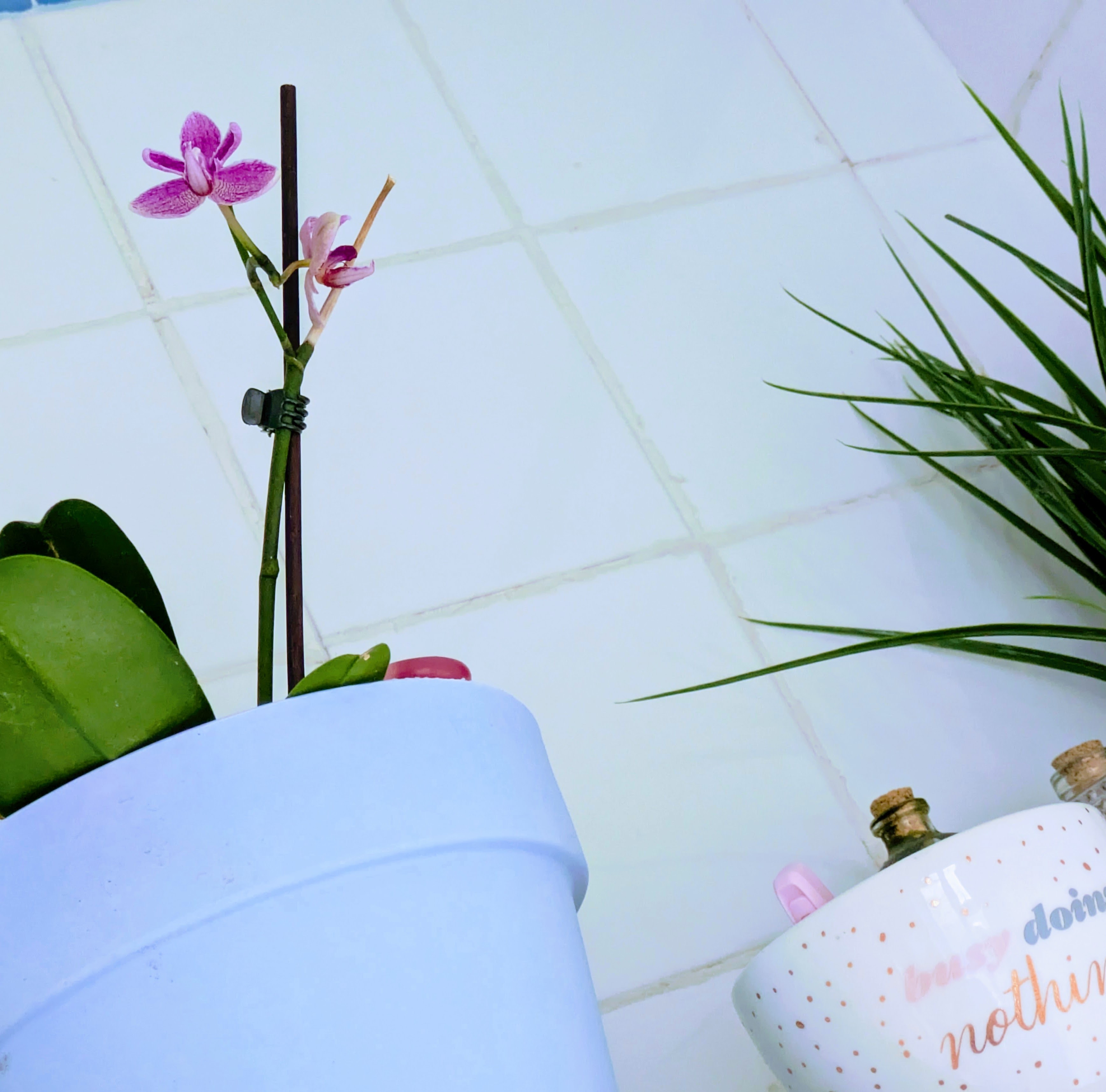
So imagine my horror when a poor innocent orchid came into the house as a mother’s day present, as I unwrapped the beautiful specimen I feared for it’s life. My first move was to put it in the bathroom, there it would have a chance of survival in the steamy atmosphere. Then on one of my many visits to a garden centre I spotted orchid compost, I didn’t know such a thing existed as I had never before entertained the notion that I could keep an orchid alive long enough to repot it. It’s been a long winter and spring since the last original flower dropped, the stalks looked barren but reassuringly the leaves looked very healthy so I was cautiously optimistic that the plant was still showing signs of life.

Then the miracle happened, a few weeks ago I noticed two buds on one of the stalks and just last week they opened and revealed the most beautiful flowers. I don’t mind saying that I am quite proud of my effort and eventual success, But I’m not going to get carried away and fill the house with other house plants, I believe that would be a step too far.

One of the good things about working in the community was chatting to the patients about their gardens. During my time in the Rapid Response Team, to prevent hospital admissions I visited quite a few patients to administer intravenous antibiotics. Most of these drugs were infused over 30 – 60 minutes so there was plenty of time to talk all things plants. One particular chap had a lovely garden and had the most pretty snapdragons amongst the array of beautiful plants. When I returned the following day he had very kindly bunched up a few cuttings for me to take away. They bloomed happily for quite a while in a pot by the back door until, presumably, they died off.

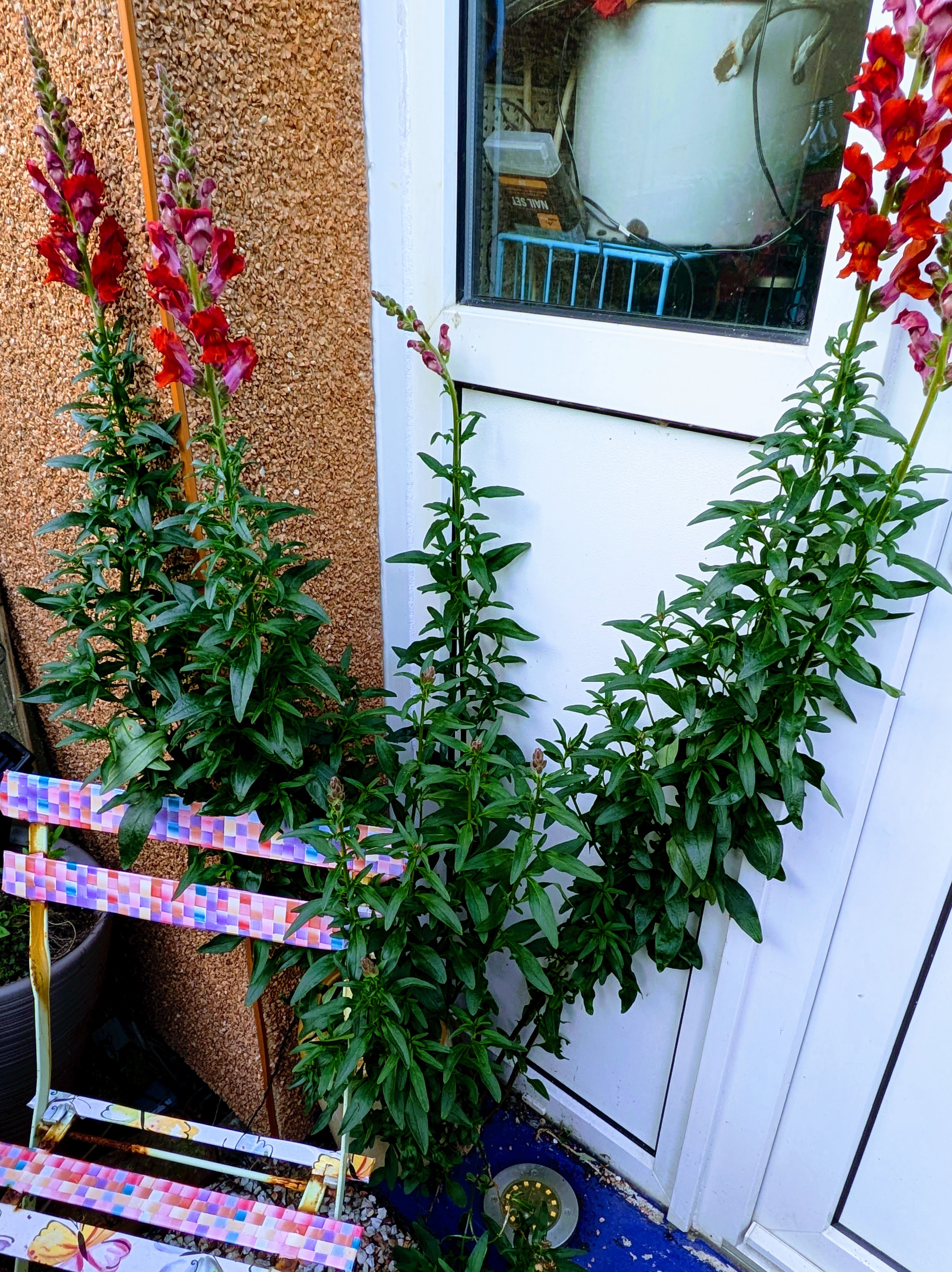
Or so I thought! This spring I noticed something green springing from the back door step. As the season moved on the little crop grew rapidly until it was obvious that the snap dragons had not died off at all. They had apparently taken steroids, taken root in the concrete and erupted into these massive beautiful blooms.

Nature really is miraculous.

The Promise

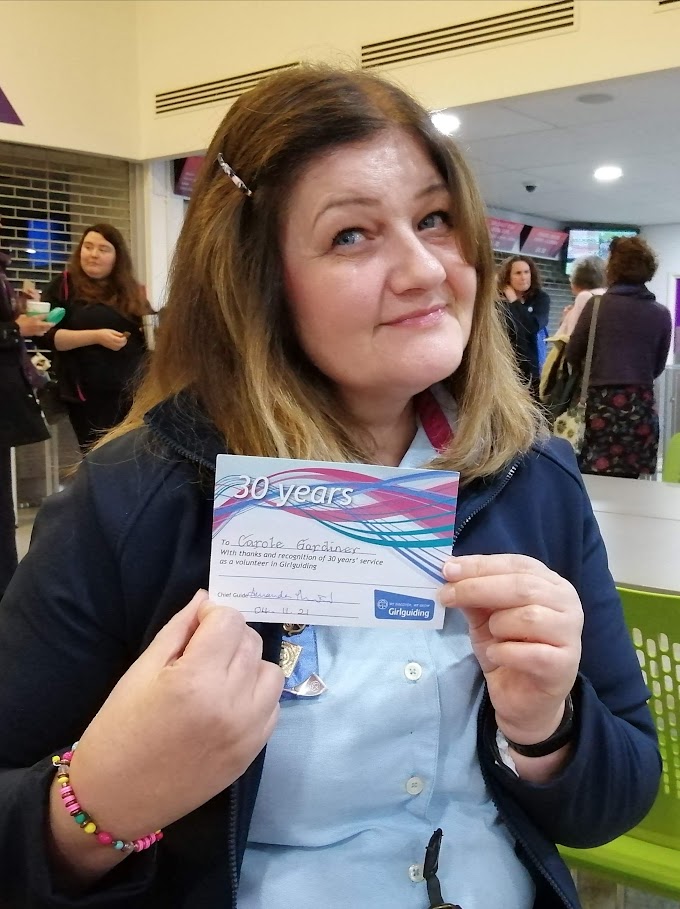
Last month I renewed my guide promise at a Thinking Day celebration day hosted by the Trefoil guild unit I had recently joined. What is the Trefoil guild I hear you ask?

Well, before I explain I thought I would fill you in on how I came to joining this part of the guiding association. As did many a young girl in the UK I became a brownie 50 years ago at the age of 7, guide at 10 and a ranger at 14. I didn’t last long in the rangers and left to join the venture scouts, but that is a different story. As a guide I helped out at my mum’s brownie guide unit and continued as a young leader while I batted for the other side as a venture scout. It’s a well known fact that daughters of guiders usually get drawn into leading units and I was no exception. I became a unit leader at 18, completed my adult leadership qualification and became Tawny owl, mum’s second in command in the 47th Bristol brownie unit. The guide association decided to create another section for 5 to 7 year olds, Rainbows. So in 1991 I set up the first rainbow unit in my area and became the guider in charge, while continuing to help at the brownie unit. Eventually I took over the reins of Brown owl from my mum and she took over the rainbows, a smaller and more manageable group.

Unfortunately, like many groups, our units didn’t survive the covid pandemic. Due to varying reasons, once restrictions were lifted, my merry band of guiders and helpers were unable to continue support me with running the units and my mum was in her 80’s and not able to commit to attending every week. Also I had started a masters in advanced nursing and couldn’t find enough spare time. So with great sadness the units folded.

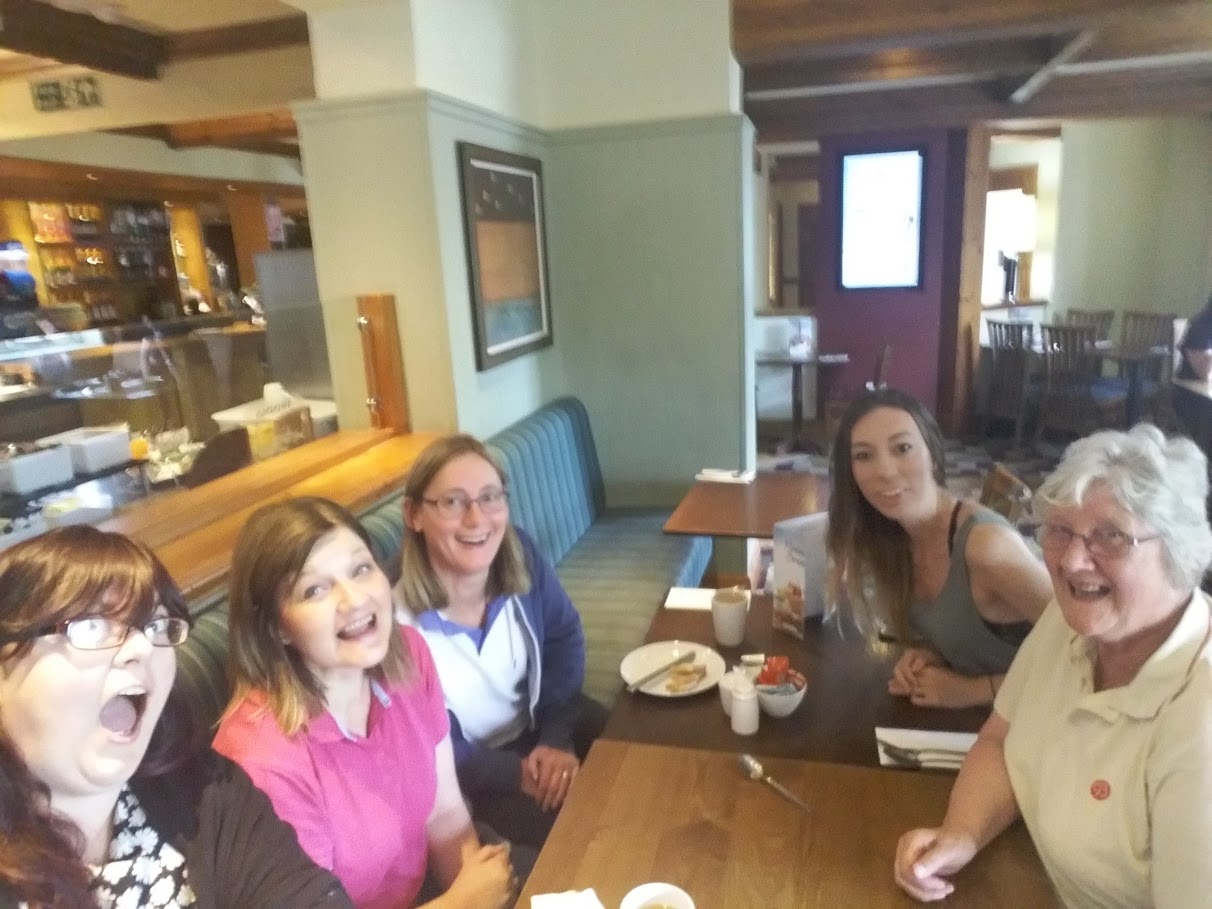
Being part of guiding is like being in the mafia, you can’t leave, you know too much. So what happens to a guider who hangs up her neckerchief? This is where the Trefoil guild comes into it, or the old biddy guiders as I used to lovingly call them when my mum first joined. Of course now I’m a member I don’t call them that anymore.

As early as 1920 ex guides formed unofficial groups to maintain contact with their old guide companies and in 1935 the “old guides” organisation was formed, so my “old Biddy” name wasn’t far off the mark! The name Trefoil guild was adopted and became a self governing and self financing body from 1952 as a group for former guiders in the UK and overseas territories.

So what does the Trefoil guild do? far from being for old biddy guiders the organisation is open for anyone over the age of 18, for women and men. The 4 main aims of the guild are find friendship, give support, get involved and get active. Groups tend to meet once a month and get involved in various activities at these meetings. Members can be called upon to support units at meetings or days out to help with activities and keeping the girls safe. Mostly it’s an organisation where members can enjoy personal and social opportunities based on guiding and scouting principles without the added stress and commitment of running units.

As I’m still working full time I haven’t been to many meetings, so far my Trefoil experiences include eating! a cream tea, a post Christmas lunch out and a ploughman’s lunch at the afore mentioned Thinking day celebration. This day on 22nd February is celebrated by the guiding sisterhood throughout the world. The guiding family renews their promise on this day and this year by renewing my promise I became an official member of my Trefoil group. Although I did actually fluff up the promise by saying that I would serve the Queen instead of the King, you can hardly blame me, it’s what I’ve been saying for nearly 50 years!

Arty Farty Days

I’ve always thought of myself as a bit creative and I’ve dabbled with all kinds of arty projects in my time. My dad went to art college in his youth and he taught me the basics of sketching and painting when I was a little girl. But something must have gone a bit awry when I started secondary school. According to my first art teacher, lovingly called Granny Grierson, my pieces of art were nearly always ruined once I was let loose with a paintbrush. In my school reports she used the term “doesn’t know when to stop” quite a few times.

Haunted by these words I have tended to avoid the slapping on of paint, with the exception of wall painting about the house. But I’m no quitter and 45 years after those school reports I decided to bite the bullet and give creative painting another go.

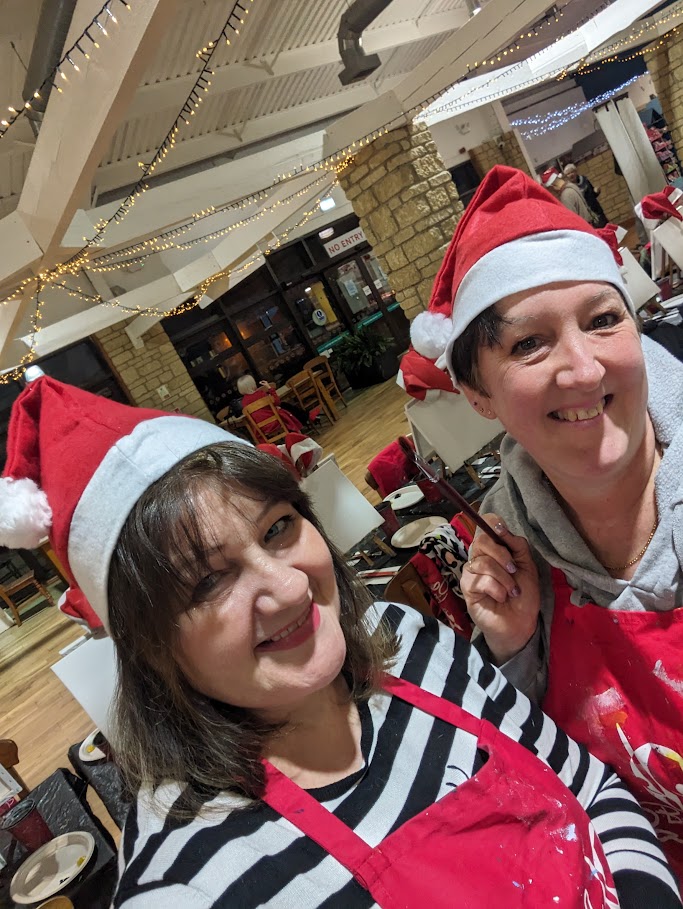
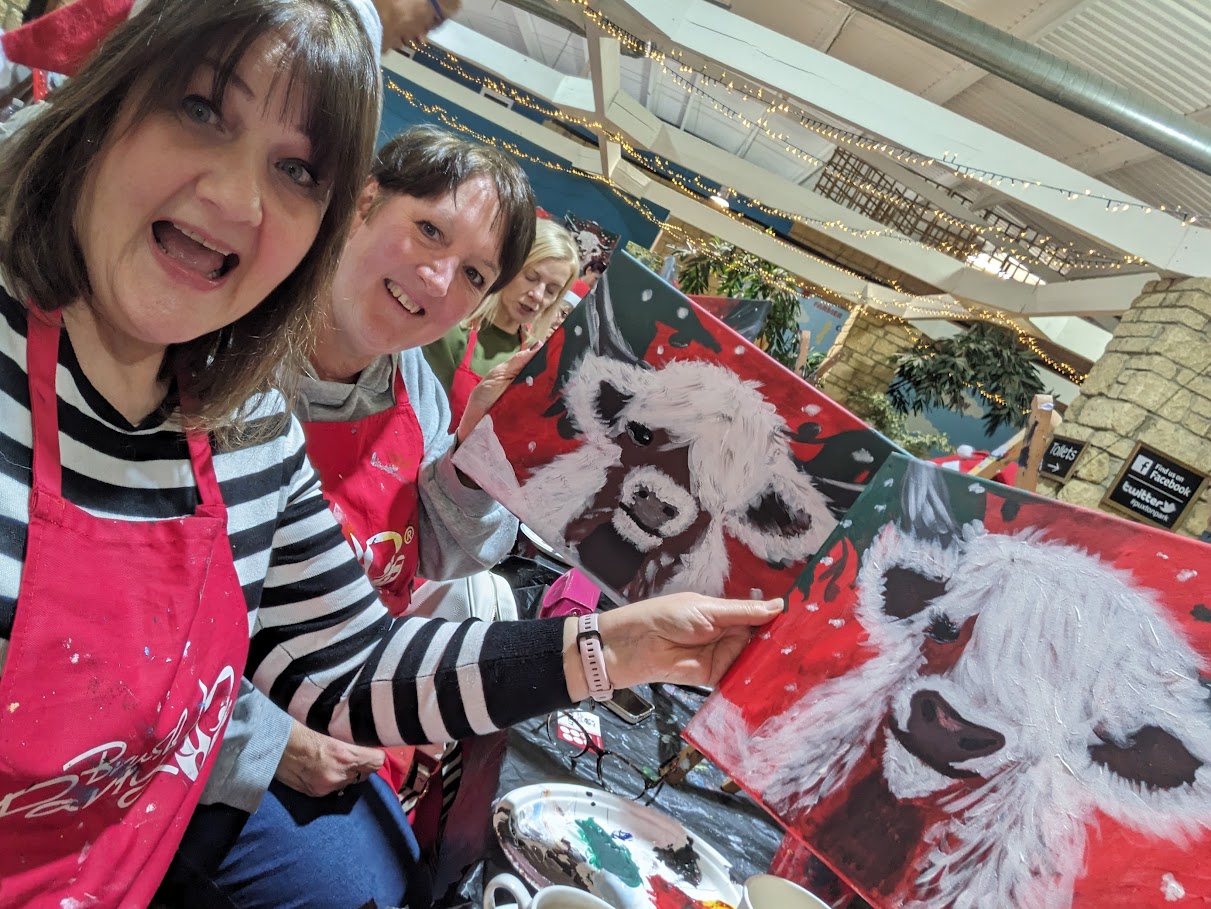
My first attempt at re-joining the scary world of paint and brushes was at a Brush Party event. These happen all over the UK at various venues such as pubs, restaurants and adventure parks. My sister in law, Sharon, and I found ourselves one evening just before Christmas at Puxton Park learning how to paint “Ice Ice Angus”. Armed with a blank canvas, brushes, blobs of paint, an apron and a Christmas hat, we followed step by step instructions to produce a pretty good painting to take home. I’m really quite proud of my Angus and he is now stationed on the toilet wall looking down on folk sitting on the throne.

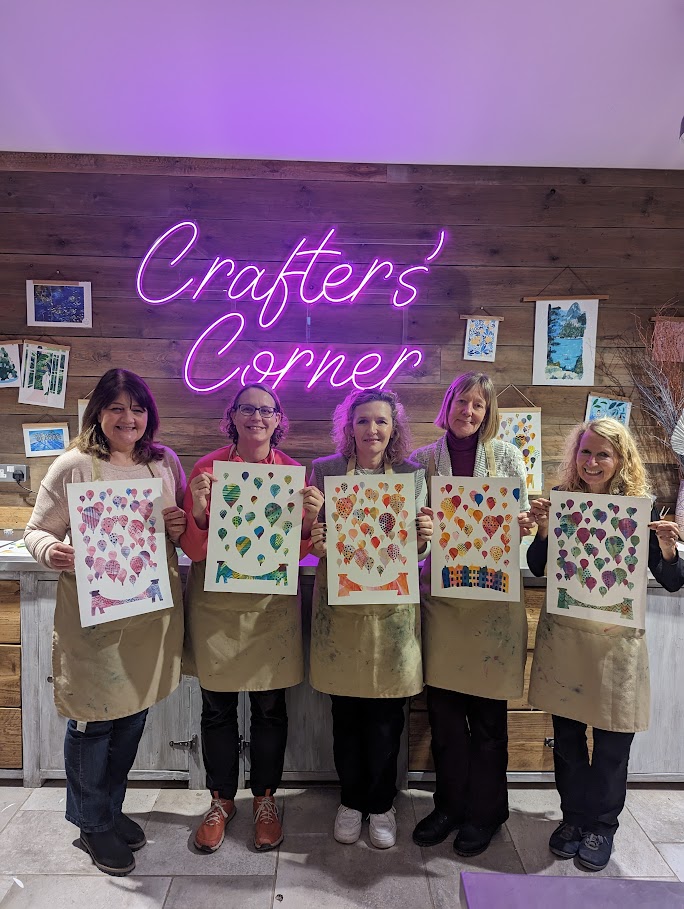
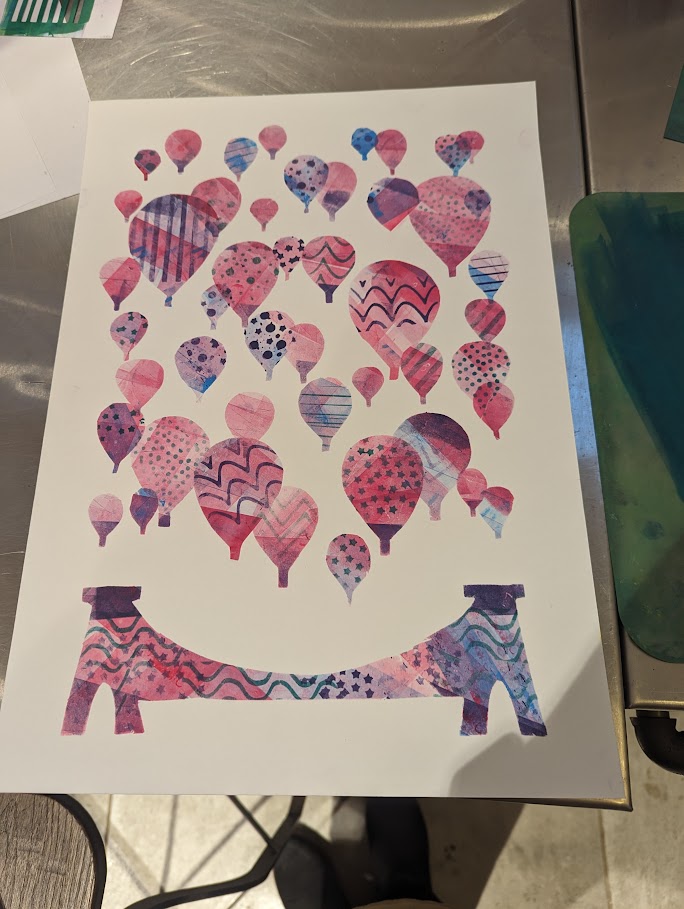
Well after the success of the Brush party there was no stopping me and I was keen to use my new found talents again. My next chance to shine was at a creative printmaking workshop at Flourish Glenavon farm that lies between Bristol and Bath. In a designated part of the farm shop, 4 members of the BMT drinking club gathered to help fellow member George participate in her birthday present. We were trusted with very sharp scalpels to cut out stencils and after creating various hues from the blobs of primary colours, we rolled this way and that until we were happy with the end result on the paper. It took a great deal of resolve to know when to stop adding another layer of paint or another decorative stencil, but with those words from my old school report ringing in my ears I resisted the urge and stepped away from the roller. I was so pleased with the end result that I kicked a David Hockney print out of it’s frame to give my print it’s new home.

I highly recommend both of these activities, they are a really good way to learn new skills to produce a something very decent to take home. The best part is spending time with friends and family in a shared creative experience.

https://www.slowsunday.co.uk/collections/workshops https://brushparty.co.uk/

Veni vidi vici

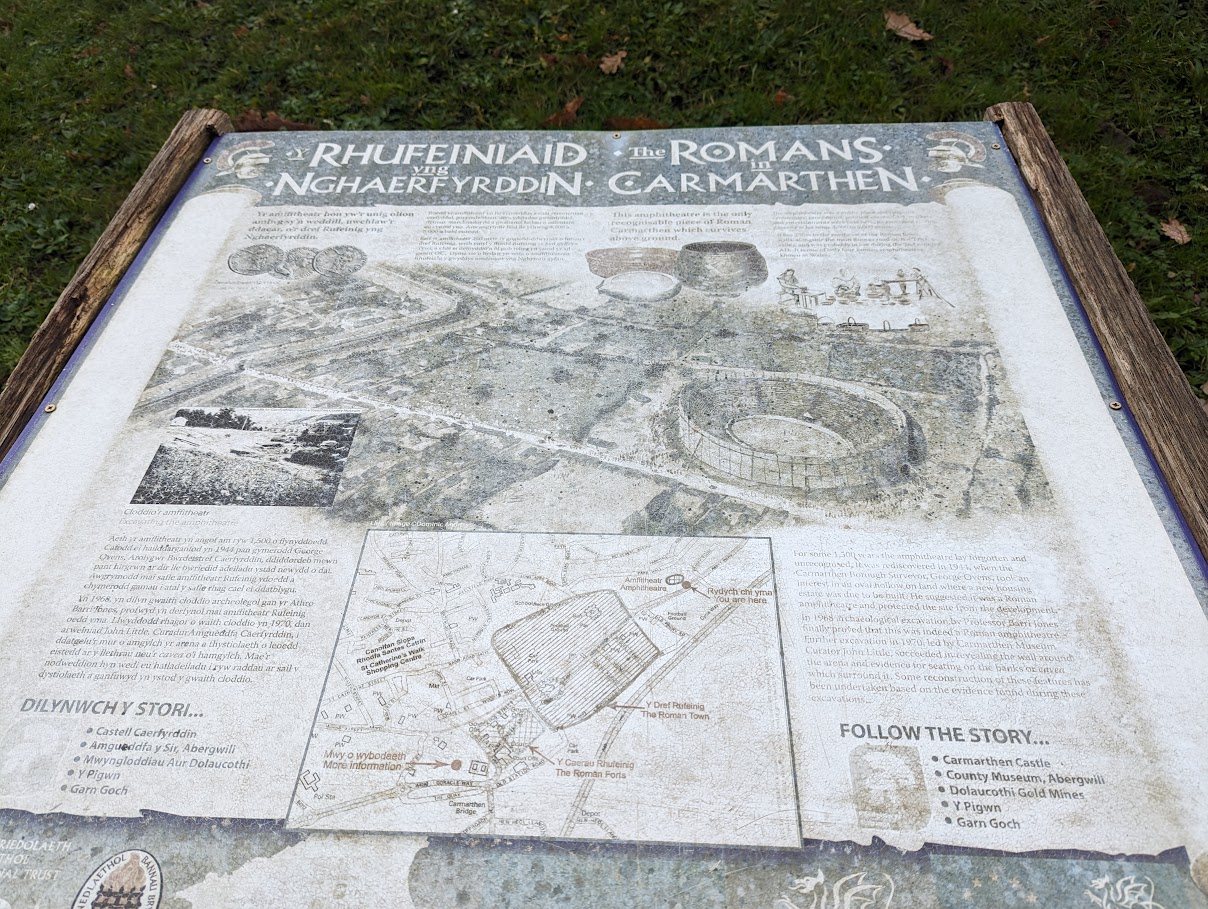
My final three arena visits were solo trips. I travelled to the land of my grandfather for the two amphitheatres located in Wales. The Romans moved into this fabulous part of the UK around 48 ACE, but it wasn’t called Wales then, just a part of Britannia Major. My first port of call was Carmarthen in the South West of the country, known in Roman times as Movidurium, it’s possibly the arena that’s furthest west from Rome. Only half of the original structure is visible nowadays, but built in the 2nd century ACE it was an elliptical shape with the capacity for 4500 – 5000 spectators.

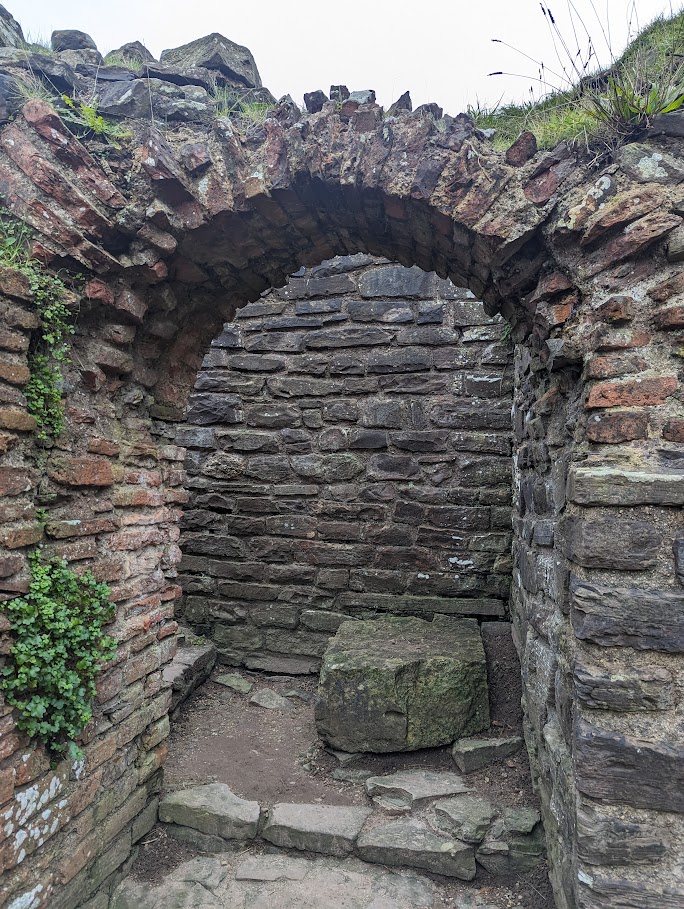
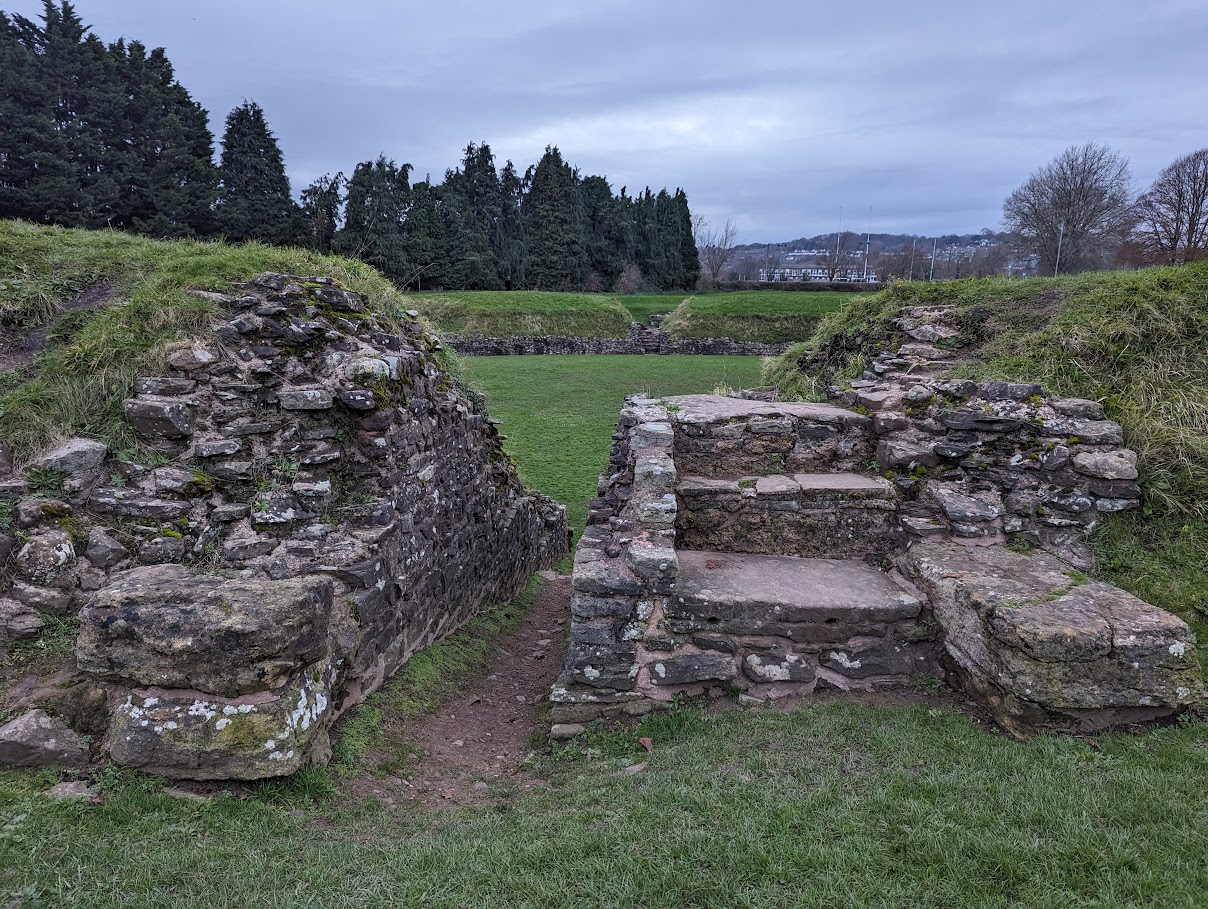
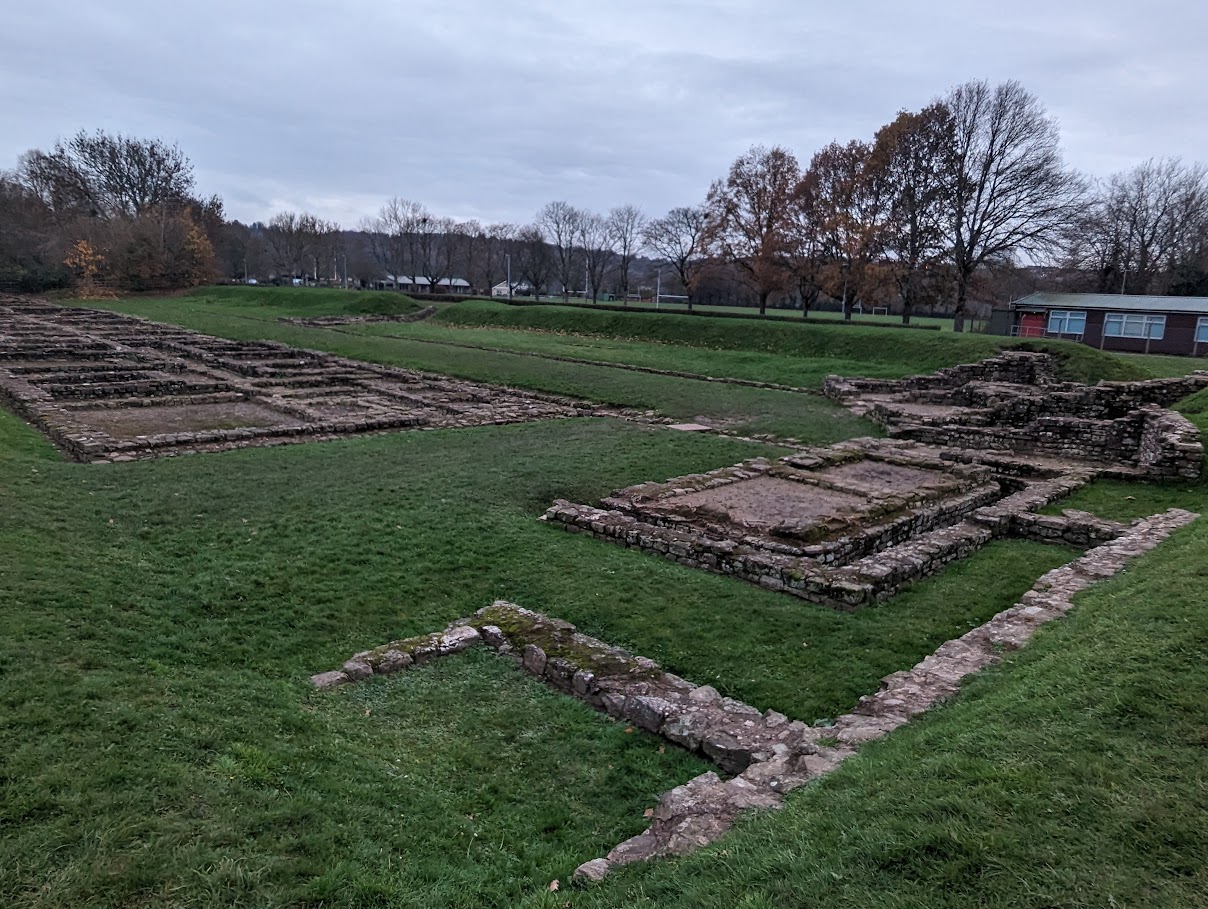
After a little wander around I made my way back east towards Newport to visit a little town called Caerleon, this was the home of the 2nd Augustan legion and 5000 soldiers were based there. The site named Isca Augusta had a very impressive amphitheatre, built around 90 ACE and big enough for 6000 spectators. I have to say up to that point it was the best preserved arena I had visited, there were lots of steps, tunnels and archways to explore, it’s the most complete amphitheatre in the UK. After a good look around I wandered down to the remains of the legionnaires barracks. There is a museum and remains of the Roman baths, unfortunately I left it too late to visit so I will definitely return for a proper look.

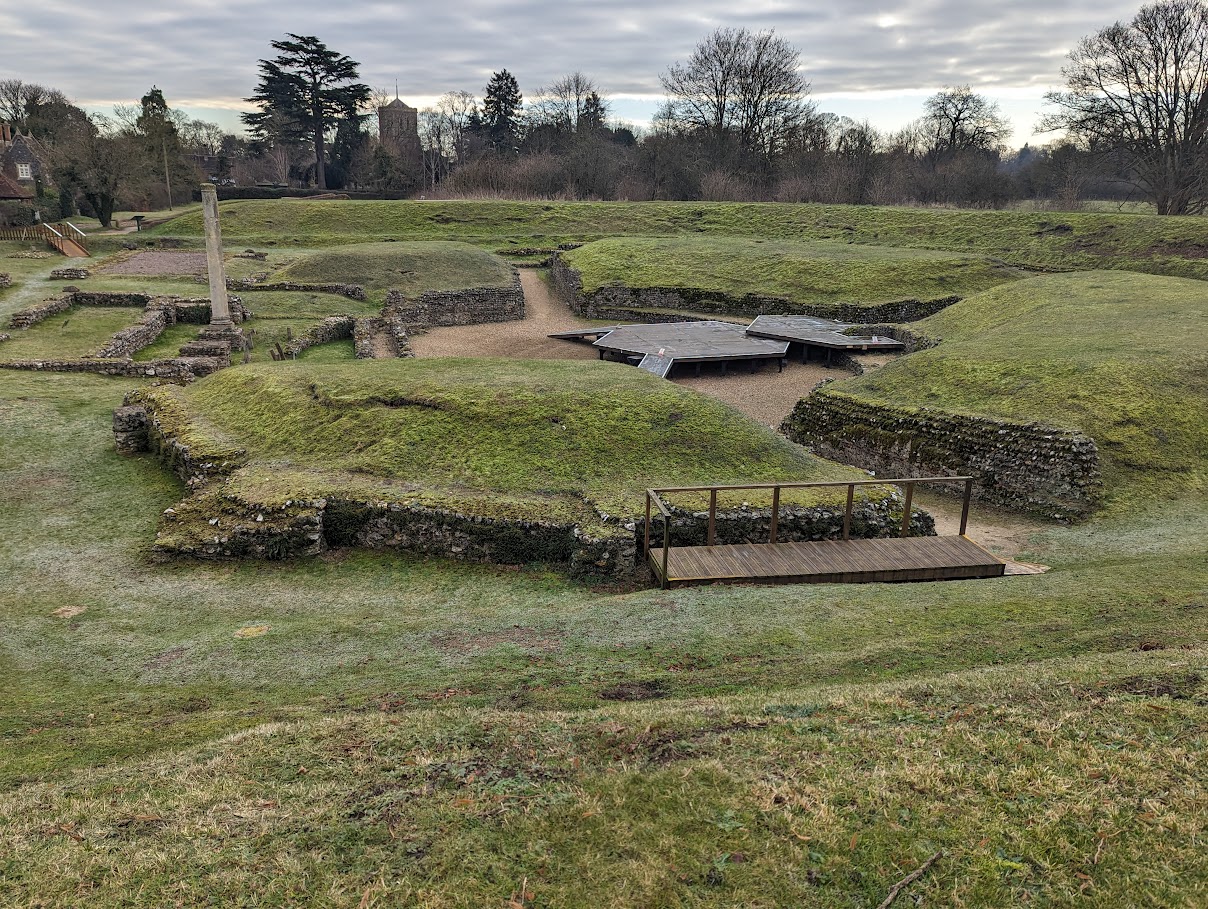
For the very last amphitheatre on my list I headed back to London where I based myself for my visit to St Albans. When I first planned my quest I wasn’t going to go there as the arena isn’t strictly an amphitheatre, as it has a stage at one end. But it is the only one of it’s kind in the UK so it’s very worthy of a visit. Just a 20 minute train journey from London the Roman town of Verulamium lies in the centre of beautiful St Albans. The arena was built around 140 ACE and it now lies in the Gorhambury Estate, so it was the only site I needed to pay to see, but it was worth the very small fee. It’s position is alongside the famous Watling Street that ran from Londinium to Deva Victrix, ( London to Chester), and it had a capacity of 7000 spectators. After a wander around I also checked out the hypocaust with a beautiful mosaic and a mooch around the museum with a group of very unruly school children and their harassed teachers.

So that is my UK Roman amphitheatre quest finished and I have thoroughly enjoyed it. I love how reading a random post can generate a planned trek around my country to discover the history but also incorporate it into mini breaks with friends and family.

Stay tuned to discover what my next quest will be …

Still in the footsteps of gladiators

I visited the next three amphitheatres on my hit list while enjoying mini breaks with family and friends.

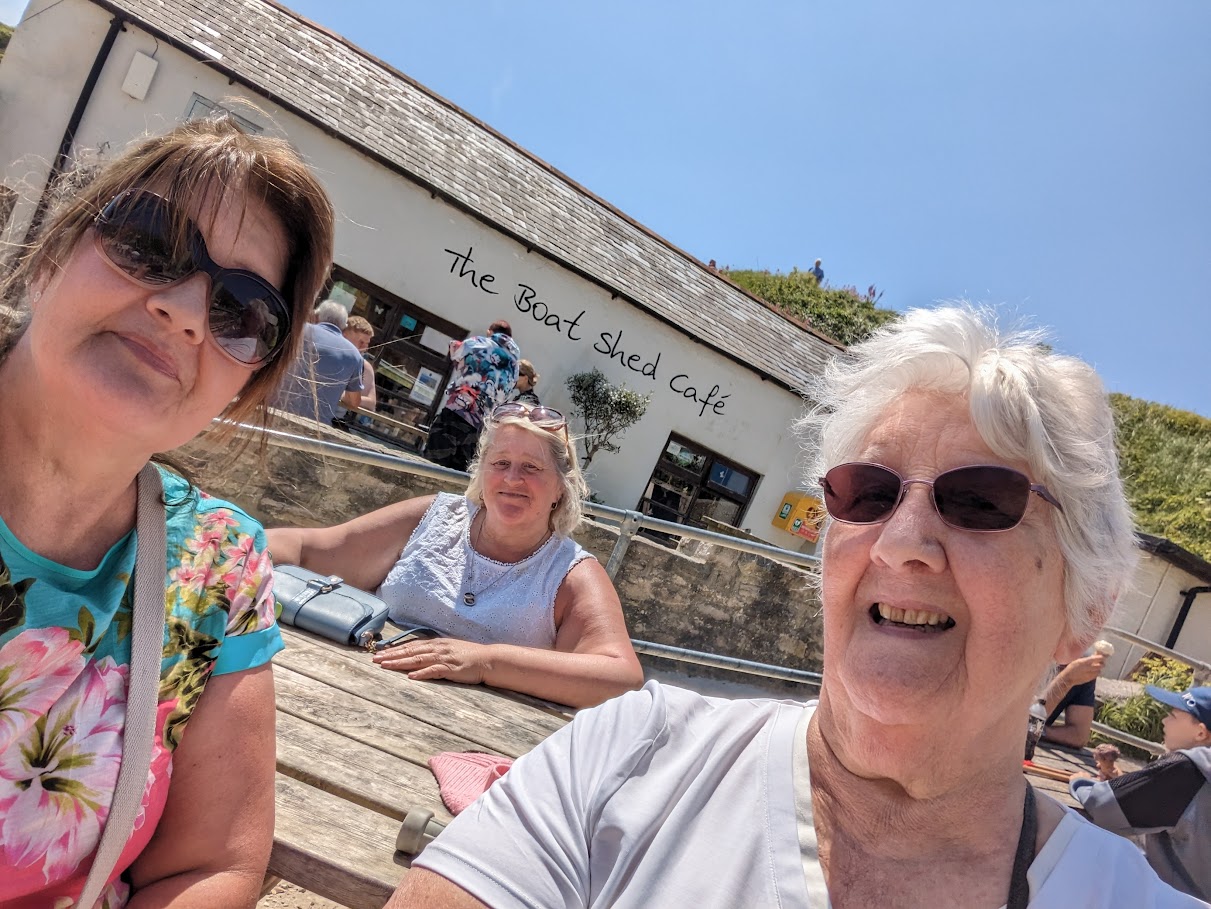
On the way to the fabulous Dorset resort of Weymouth, a place full of many happy memories for me and my family, is Dorchester. A delightful town with lots to see and do, it’s roots date back to Roman times when it was known as Durnovaria. In the south of the town lie the Maumbury rings, a Neolithic henge. Around 60 ACE the Romans modified the rings to create an arena, the biggest in the UK, by digging out and flattening the inside and flooring it with chalk and sand. The banks were increased to the height they are as seen today. As my mum and my friend Deb waited in the car I had a bit of a mooch around the amphitheatre before we continued onto Weymouth for a few days in the sun.

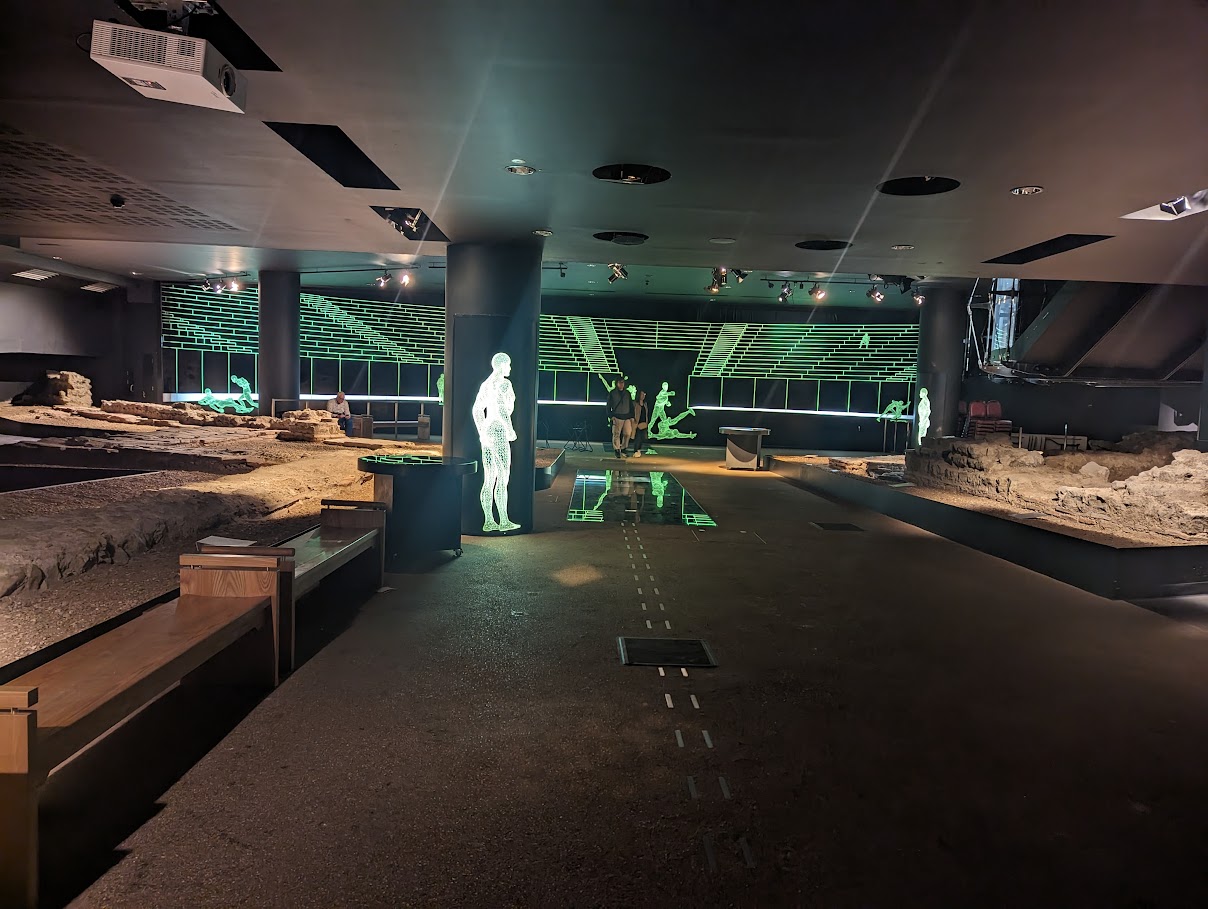
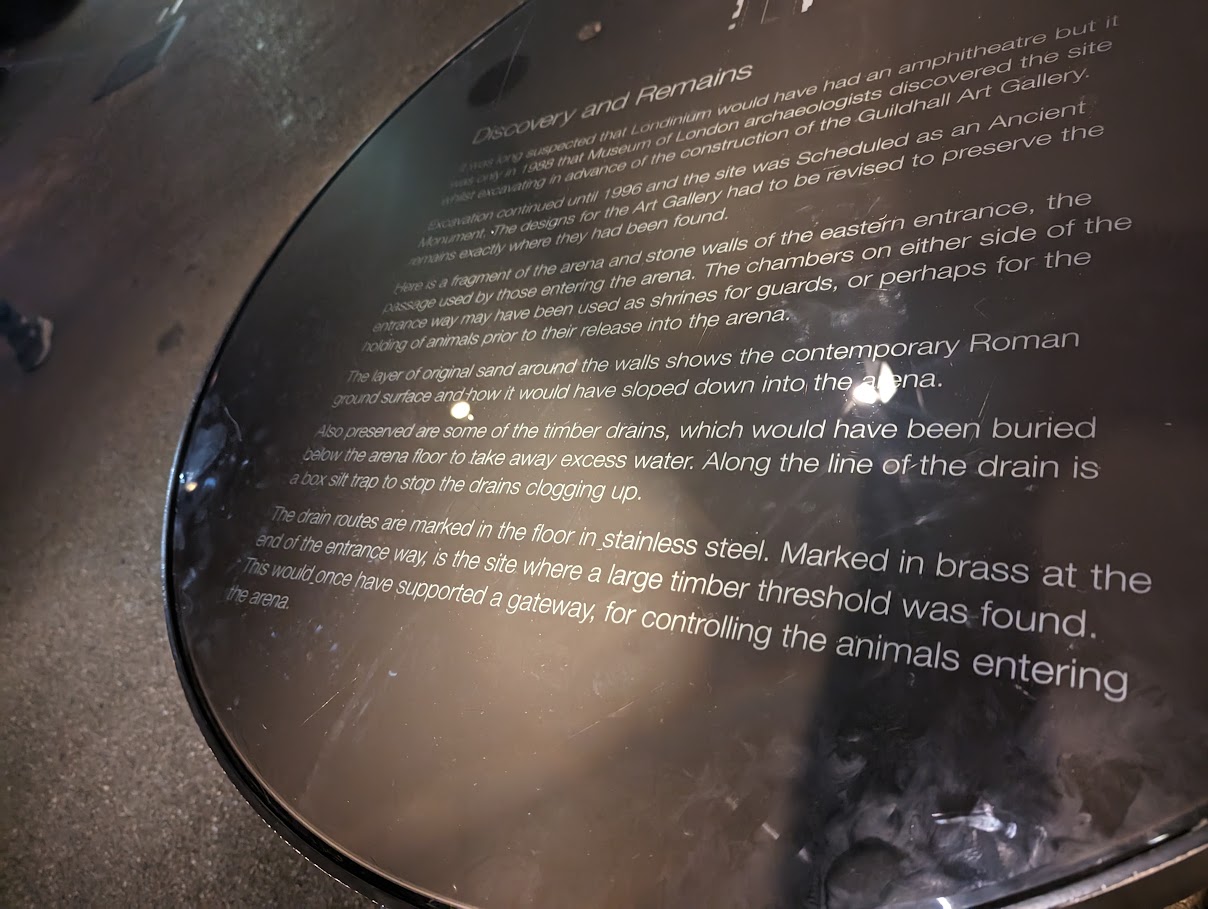
Not long before the trip to London to celebrate the 60th birthdays of my friends Bev and Debbie, I read about the underground amphitheatre that was discovered in the Guildhall Yard in 1988 during an archaeological dig to prepare for the new Art Gallery building project. Initially when built in 70 ACE it was a simple wooden structure for the entertainment of the citizens of Londinium, but was upgraded to a more impressive stone arena with the capacity for 6000 people. Unusually it was built within the city walls, remains of the walls can still be visited around the area. We had a wander around the site in the morning before we went in our 1970’s finery to the Mamma Mia party at the O2.

Chester is quite a long way from Bristol for a day out to check out an amphitheatre, but it’s a hop, skip and a jump from Liverpool and that’s where I was staying with my friends Deb and Selena for a couple of days. We had the most amazing time doing all things Beatles, Cilla and Liver birds. On the way home with stopped off at Chester, known as Deva Victrix in Roman times, to cross another arena off my list. It was one of the largest amphitheatres in Roman Britain with a capacity of 8000 – 12000, but only two fifths are now visible to view. It’s still an impressive sight and also there are the lovely Roman gardens to stroll around and admire the beautiful mosaics.

Next stop Movidurium, Isca Augusta and Verularnium … aka Carmarthen, Caerleon and St Albans.

In the footsteps of gladiators

As I have already alluded to with many posts in this blog, I am an classical history nut. I love nothing better than wandering ancient ruins and learning about the history. I was having a bit of a mooch around a well known search engine and discovered that there are 10 Roman amphitheatres in the UK according to Heritage Daily.com. Armed with my list, I did my research and made plans to visit each arena, last week I completed my quest.

But before I write about the sites I visited I thought I’d just say a few words about the amphitheatres I didn’t travel to. I live in Bristol in the Southwest so I needed to weigh up if the journey was going to be worth it, to that end I checked out the photos taken and posted by previous visitors.

In Chichester, it’s roman name Noriomagus Reginartum, there is nothing but a field with a gentle bank that outlines where the arena once stood.

Near Margate in Richborough, known in Roman Britain as Rutlipiae or Portus Ritupis, is also essentially a field but this time with a hollow marking the spot where the amphitheatre once was.

Much as I love a good day out, I figured it was a long way to travel to see a field when I had no other reason to visit, so I was content to look at the photos and read a bit more about them online.

My quest began by happenstance well before it was a conscious decision to do so. In January 2018 while on a family get together at my cousin Amelia’s house in Reading, we went on a bracing walk after Sunday lunch and had a wander around the amphitheatre at Silchester. It was built around 60 to 85 ACE when the town was called Callera Atrebatum and was one of the earliest arenas built in Roman Britain. It stood just outside the city walls of a large Roman town with the usual street grid format over 40 hectares. Although I have always been interested in ancient history I never really fully appreciated this look around which is reflected in the rubbish photos I took!

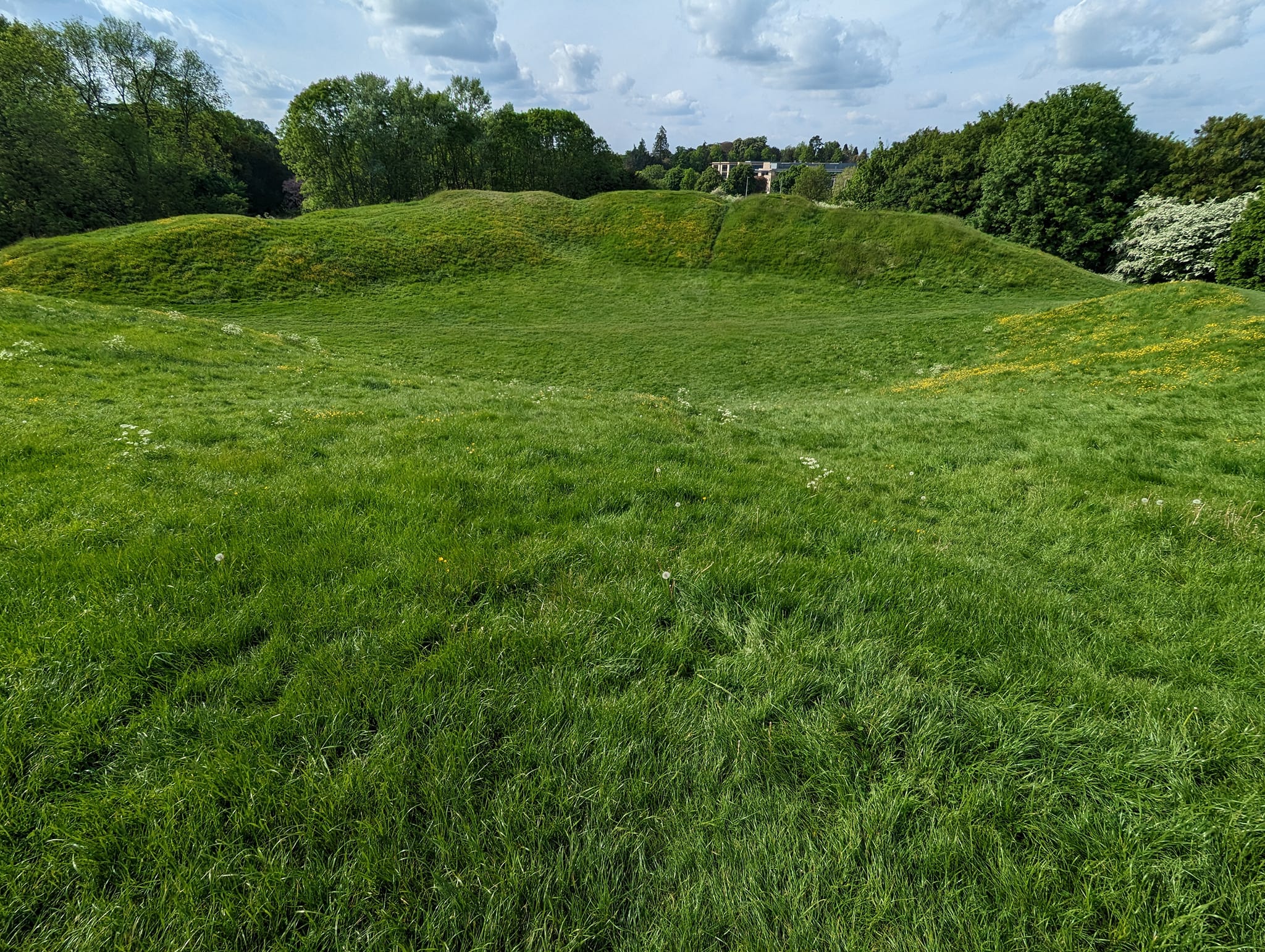
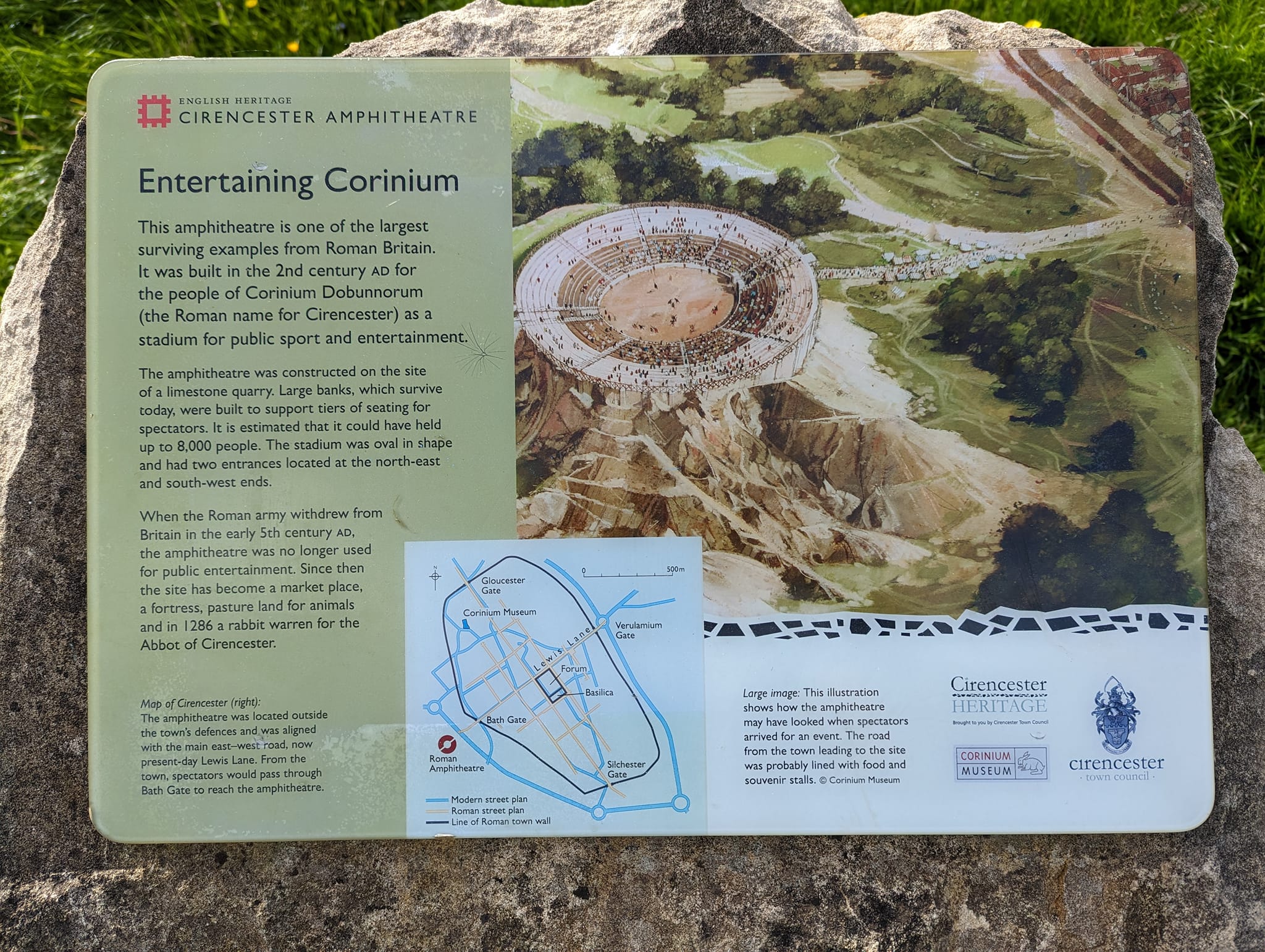
The next theatre that I visited by chance was at Cirencester. My mum and I had been on a lovely day out to Bourton on the Water and on the drive home I didn’t realise that I would be driving past the site. The arena was on my hit list but I hadn’t planned on checking it out on that day. I saw the sign for it and took my chance to cross another arena off the list. Built in the early 2nd century ACE it was one of the largest amphitheatres in Roman Britain. The city was known as Cornium and had a population of over 10000 inhabitants. The remains are massive earthworks but you can clearly see the size of the arena and imagine how it would have looked in it’s former glory.

Next stop Dorchester, London and Chester aka Durnovaria, Londinium and Deva Victrix….

Down memory lane

While volunteering at the Birmingham Commonwealth Games I decided to stay outside the city at Stourbridge, partly because I knew it would be very busy in Birmingham, but mostly because I love the Black country. My paternal grandparents and my dad came from this beautiful part of the world, we visited every year staying in Halesowen.

It’s not all work when volunteering in the games and there are a few days off. My first outing on an afternoon off was a hike around the Clent hills, as a child I spent a lot of time bombing around the country lanes in granddad’s mini clubman and running around the hills and woods for hours until it got dark.
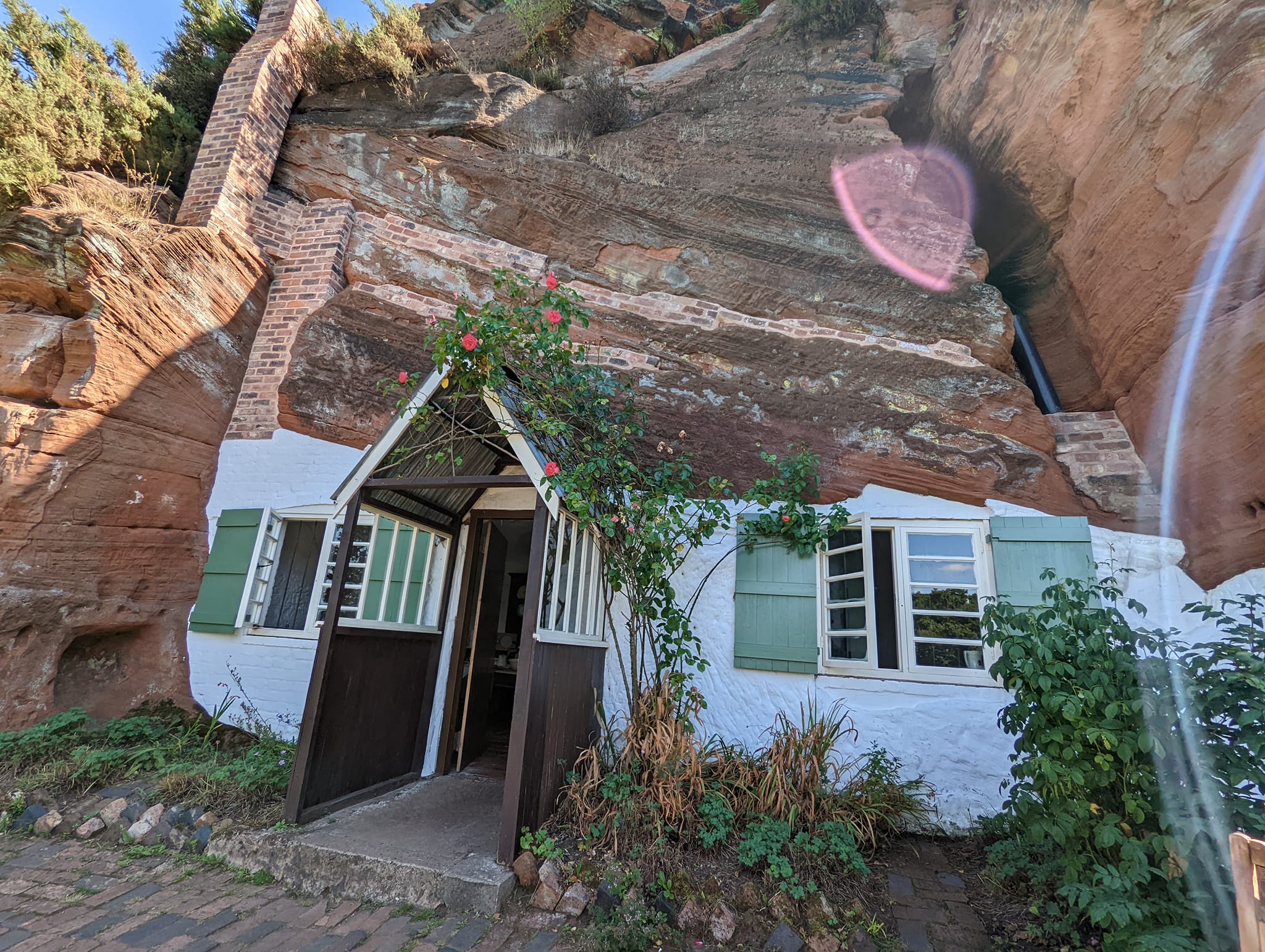
On another day off I thought I’d try and find the big sandy area in the middle of Kinver woods, we went there a lot when I was little with a picnic and granddad’s calor gas stove to brew tea on. I decided to walk the two hour trail hoping that I would come across the sandy bit as I couldn’t actually remember exactly where it was. I didn’t find it but what I did discover was Kinver edge and the rock houses. These amazing little houses are dug out of the red sandstone and the earliest settlement dates back to 1777. In the 1861 census, eleven families were registered as living there. Managed now by the National Trust, it’s a fascinating step back in time with a lovely tea room for a pit stop with cake.
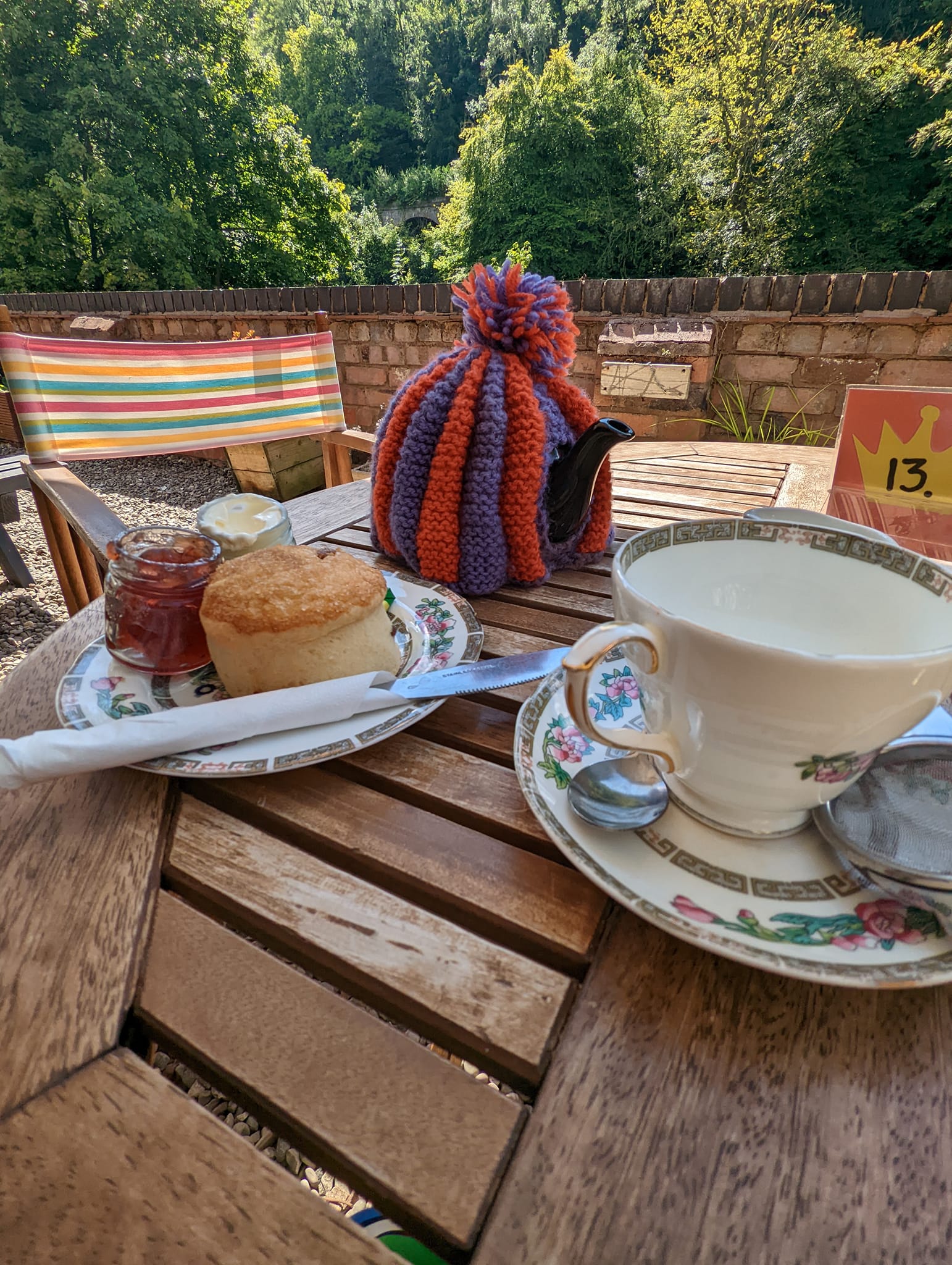
I stopped off at Kinver on the way back from Iron Bridge, this is a place I’d never been to and was keen to visit after reading about it. The world’s first cast iron bridge was built in 1779 over the river Severn in Shropshire. This amazing structure spans the Ironbridge gorge and looks spectacular from every angle especially from the riverside café with the most lovely tea cosies.

I never tire of the West Midlands, not just because the claim it has my heart with childhood family memories, but also because there are so many fabulous places to discover and learn about in beautiful countryside.

All for a good cause

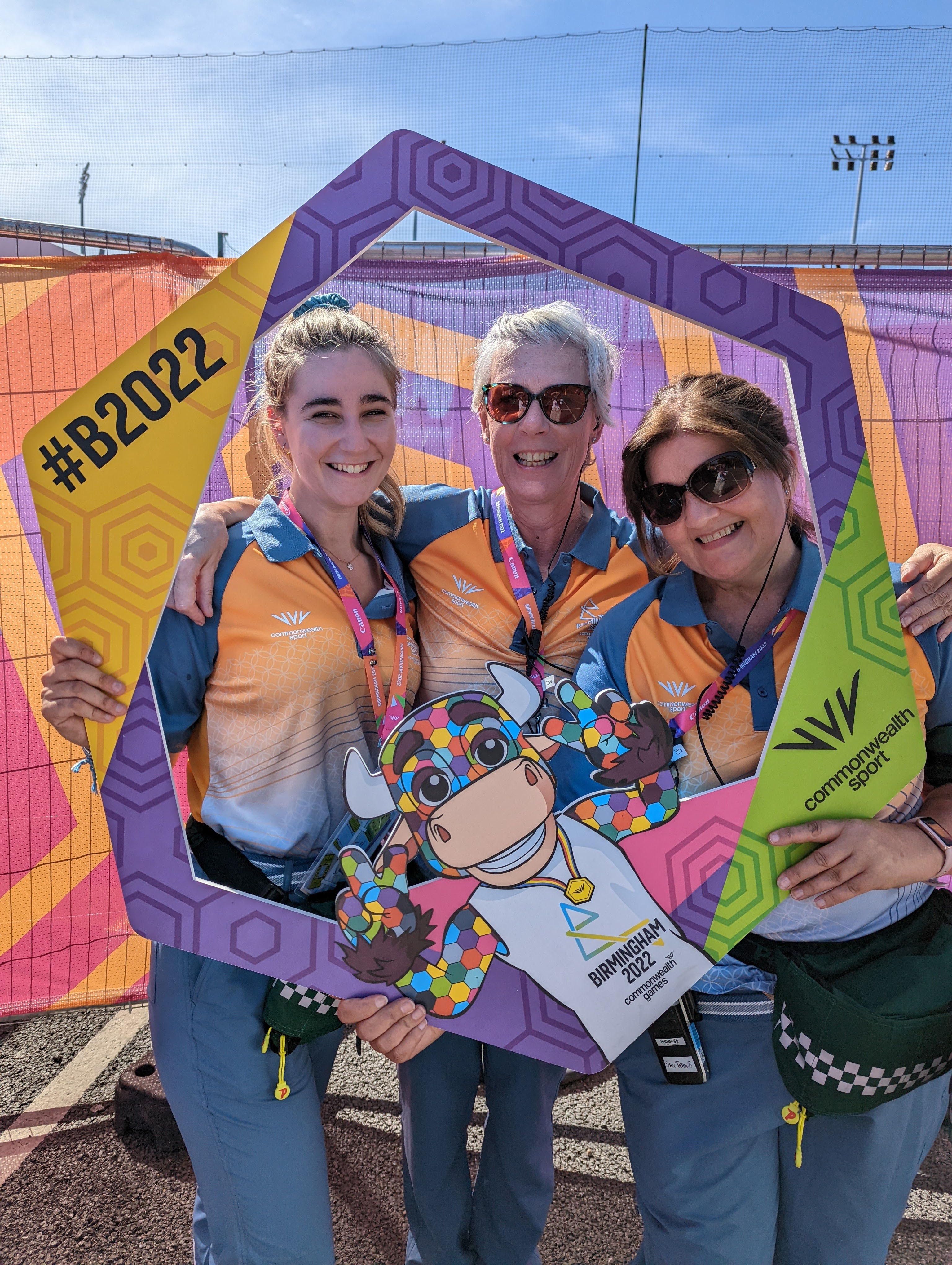
Following the success of my previous medical volunteering adventures at the Glasgow Commonwealth Games and the London World Athletics Championships, I decided to give it another go. I was very fortunate to have been selected as a first responder team leader for the Birmingham Commonwealth Games in 2022.

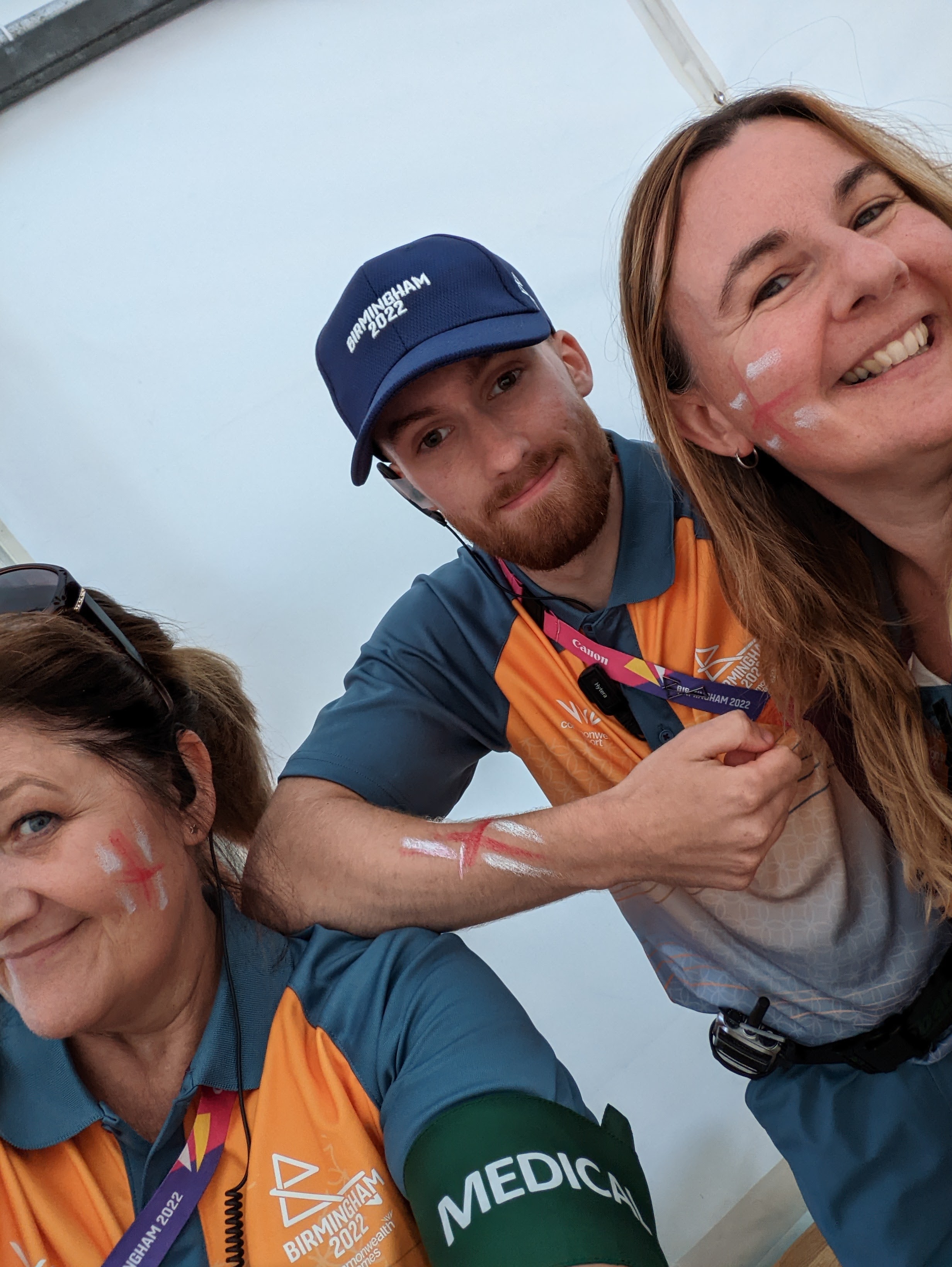
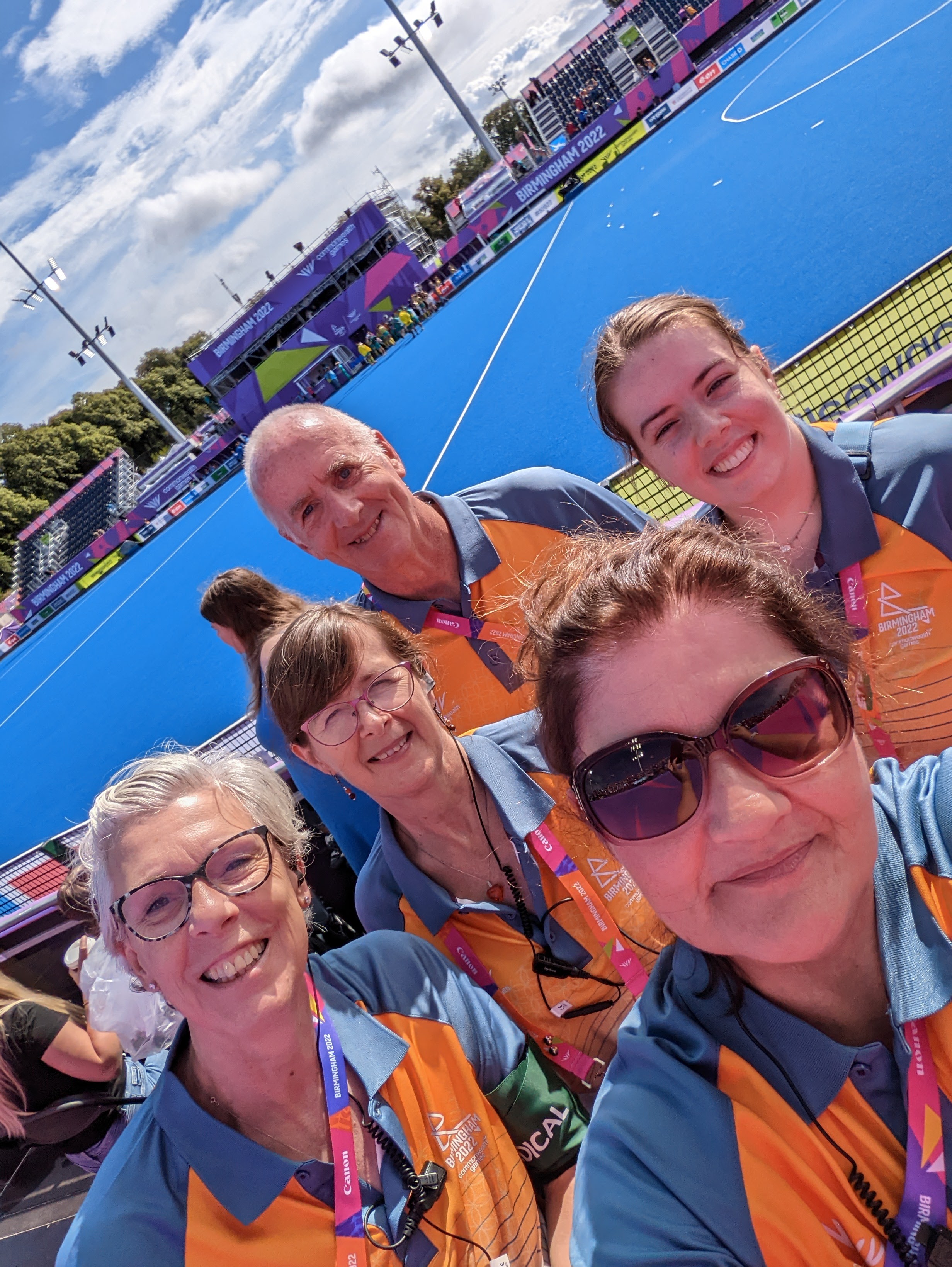
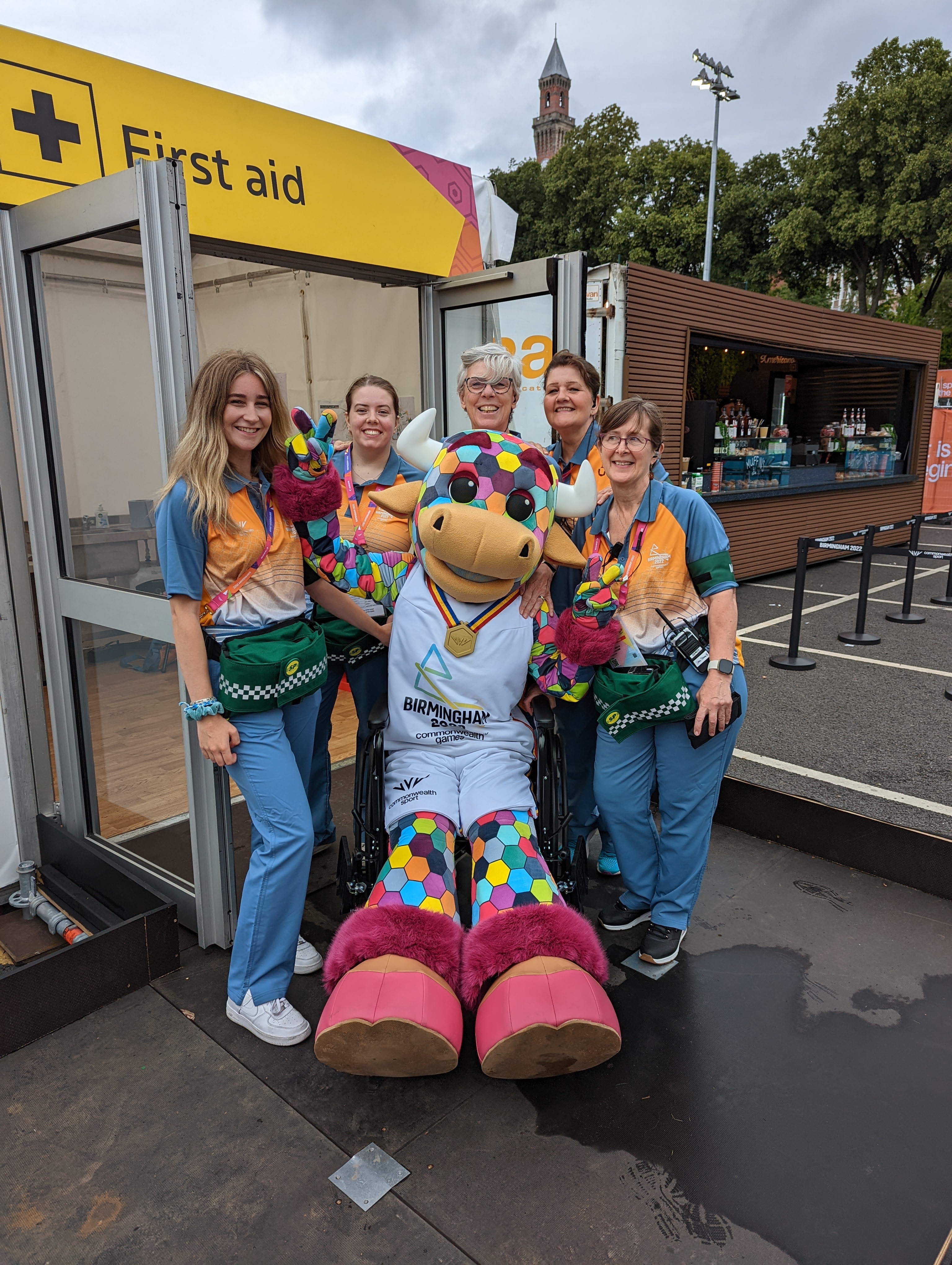
My base for the games was Birmingham University campus as spectator medical cover for squash, not my first choice for sport but we also covered the hockey at times and were able to see the England women’s team win gold. But for me that’s not what it’s all about, as usual I worked with an amazing team and made lots of new friends.

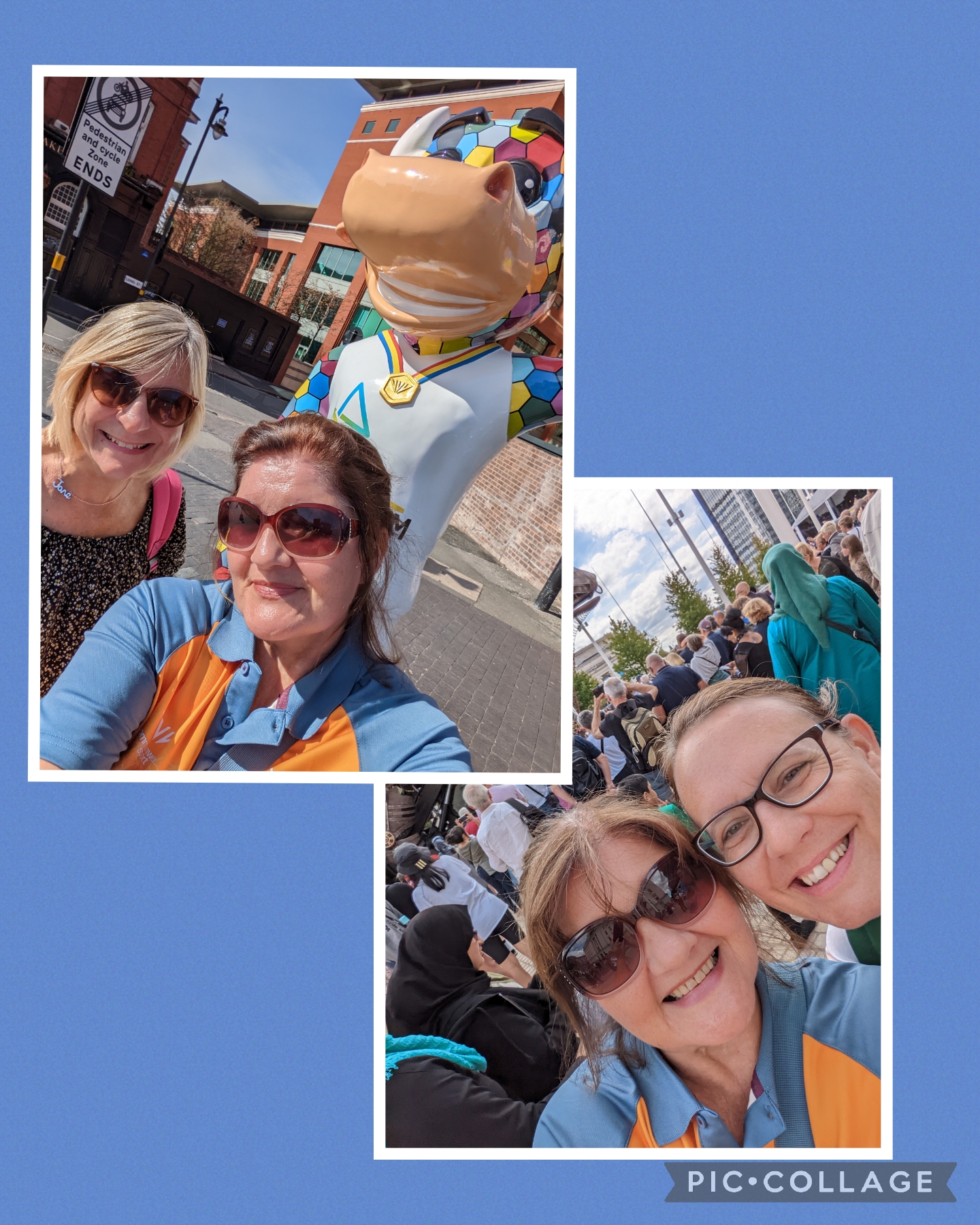
What was great this time, being only 2 hours from home I had visits from two best friends. Jane got a ticket for the gymnastics, I met her after my shift and we had a bit of food together and a catch up before she got her train back to Bristol. And after holidaying up in the north, George stopped off at Birmingham with her family to check out Ozzy the bull and all the other festivities. I met up with them before one of my shifts for a wander around and a bit of people watching. It was lovely to see them and share my commonwealth experience with them.

This time I also managed to get tickets to watch the gymnastics on two days, the ladies all around finals and day two of the apparatus finals. I’m a massive fan of gymnastics and this is the first time I’d actually watched it live. The atmosphere was amazing and the gymnasts were fantastic, it was definitely money very well spent.

I can’t recommend this type of volunteering enough. It’s a fabulous way to make friends, experience international sporting events for free and you get to keep all the kit!

Previous Older Entries